0%

China Top 10 Recycled Clay Products Manufacturers? This question deserves more than a simple supplier list. Recycled Clay Products can reduce virgin-material demand, but their real value depends on processing quality, durability, and verified sourcing. The United Nations Environment Programme reported that buildings and construction accounted for 37% of global energy-related and process CO₂ emissions in 2022. Material choices therefore matter, especially in China’s large construction market.

China remains a major producer of bricks, tiles, and ceramic materials. The National Bureau of Statistics recorded approximately 2.02 billion tonnes of cement output in 2023, showing the scale of the country’s broader building-material ecosystem. However, cement data does not directly measure recycled clay production. That distinction matters. This introduction uses manufacturer capacity, factory experience, product testing, recycled-content evidence, export activity, and quality systems as practical comparison points. ISO 14021 also provides useful guidance for evaluating self-declared environmental claims.

The final selection should not be treated as an official government ranking. Public data remains uneven. Some factories publish laboratory results and traceability records, while others provide attractive sustainability language without enough detail. Look closely at kiln temperature control, water absorption, compressive strength, surface consistency, and packaging waste. These details become visible when a sample tile arrives with chipped corners or uneven color. Certification helps, but it never replaces inspection. This review aims to identify credible Chinese manufacturers while acknowledging a limitation: recycled clay performance can vary between batches, regions, and product categories. In practice, buyers should request current test reports, factory audits, and production samples before making a final decision.
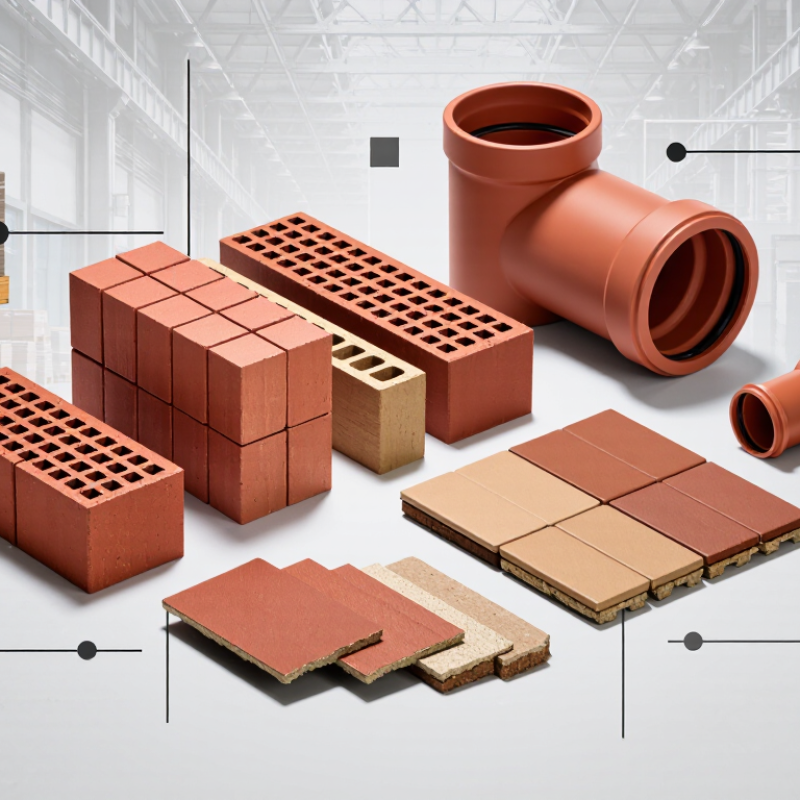
China Top 10 Recycled Clay Products Manufacturers?

What Are Recycled Clay Products and Why Do They Matter?

Recycled clay products are ceramics made with recovered clay waste or mineral content from earlier production. Factories collect trimmings, unfired rejects, and fired pieces separately. Unfired clay can often be reprocessed with water. Fired waste is usually crushed into grog or aggregate. That distinction affects texture, strength, and firing behavior.

They matter because they reduce virgin material demand and keep heavy waste away from disposal sites. They can also lower transport impacts when recovery happens near the kiln. A tile containing grog may show tiny speckles, rougher edges, or warmer natural variation. These marks are not automatically defects. They can make each surface feel less factory-perfect. Recycled clay also gives manufacturers a practical way to study material loss instead of hiding it.

Reliable manufacturers should document recovered material, moisture control, mixing ratios, and firing temperatures. Independent tests should check water absorption, bending strength, frost resistance, and surface safety where relevant. Recycled content alone proves little. The process is not flawless. A poorly balanced mix may warp, crack, or waste energy through failed batches. Buyers should request test data, batch consistency records, and clear care guidance. The greener choice is not always the product with the highest recycled percentage. Durability, shipping distance, repairability, and actual service life matter too.

China Top 10 Recycled Clay Products Manufacturers? What Are Recycled Clay Products and Why Do They Matter?

Recycled clay products are ceramic materials made with reclaimed clay, unfired production scrap, or processed fired ceramic waste. The chart compares typical firing-temperature ranges for common clay-based product categories. Lower firing temperatures can help reduce process energy demand, although actual performance depends on kiln efficiency, product design, and recycled-material content.

Temperature ranges are commonly used technical reference ranges and may vary by formulation, moisture content, kiln technology, and required product performance. They are category-level figures and do not represent any company or brand.

How to Evaluate China’s Recycled Clay Product Manufacturers

How to Evaluate China’s Recycled Clay Product Manufacturers

Evaluating recycled clay manufacturers requires more than checking catalog photos. Ask where the clay waste comes from, such as rejected tiles, fired shards, or excavation residue. The World Bank’s What a Waste 2.0 report projects global municipal waste could reach 3.40 billion tonnes annually by 2050. This makes traceable material recovery increasingly important.

Request batch records and independent laboratory results. For bricks, tiles, and pavers, review compressive strength, water absorption, dimensional tolerance, and frost resistance. ISO 14021 provides guidance for verifying recycled-content claims, but certificates alone are not enough. Compare the declared percentage with production records and weighbridge data. A factory should also explain its crushing, screening, and firing controls. Small details matter, including dust extraction and moisture testing before molding.

Visit the production line if possible. Look for labeled storage bays, calibrated testing equipment, and samples marked with batch numbers. UNEP’s 2022 Global Status Report for Buildings and Construction states that buildings represent about 34% of global energy demand and 37% of energy-related carbon emissions. Efficient firing therefore deserves close attention. Ask for kiln temperature profiles and fuel-consumption data, not vague “low-carbon” language. Some suppliers communicate well but document poorly. That weakness should not be ignored. A trial order can reveal shade variation, edge damage, packaging quality, and delivery consistency before a larger contract.

China Top 10 Recycled Clay Products Manufacturers? - How to Evaluate China’s Recycled Clay Product Manufacturers
No. Evaluation Dimension Suggested Weight Objective Evidence to Request Practical Benchmark or Reference Verification Method
1 Recycled Clay Content 15% A material declaration identifying recycled clay, pre-consumer material, post-consumer material, and virgin material percentages. The declared percentage should be product-specific, traceable, and calculated consistently for the quoted product. Review mass-balance calculations, supplier declarations, and production records.
2 Recycled-Content Claim Reliability 10% Third-party recycled-content verification or a documented chain-of-custody procedure. ISO 14021 provides principles for self-declared environmental claims, including recycled-content claims. Check certificate scope, validity, calculation method, and audit organization.
3 Product Quality Consistency 15% Recent batch inspection reports covering dimensions, appearance, moisture, density, and relevant mechanical properties. Results should comply with the agreed product specification and applicable destination-market standards. Compare at least three recent production batches and conduct independent pre-shipment testing.
4 Raw-Material Traceability 10% Records showing the source, incoming inspection, storage, processing, and usage of recovered clay materials. Each production batch should be traceable to its incoming material records and finished-goods lot. Perform a document trace from finished lot to raw-material receipt.
5 Manufacturing Capacity and Lead Time 10% Installed production capacity, standard monthly output, equipment list, lead-time history, and contingency plan. Capacity should be supported by equipment records and demonstrated shipment performance rather than stated capacity alone. Review production schedules, sample orders, and shipment records with sensitive pricing removed.
6 Quality Management System 10% Quality manual, inspection plan, nonconformance procedure, corrective-action records, and calibration records. ISO 9001 certification is useful evidence when the certificate covers the relevant manufacturing site and product scope. Confirm certificate number, site address, scope, expiry date, and certification body.
7 Environmental Management 10% Energy and water records, waste-handling procedures, kiln or drying controls, and environmental permits where applicable. ISO 14001 certification can demonstrate a structured environmental-management system, but it does not by itself prove recycled content. Check the certificate scope and review site-level environmental records.
8 Testing and Technical Support 8% In-house laboratory capabilities, external laboratory partnerships, technical data sheets, and sample-development procedures. Testing should match the product application, such as particle size, moisture, strength, abrasion, thermal behavior, or chemical composition. Review test methods, equipment calibration, laboratory qualifications, and sample reports.
9 Regulatory and Market Compliance 7% Declarations of conformity, restricted-substance test reports, safety data where relevant, and destination-market documentation. Compliance requirements depend on the end use and importing market; applicable requirements must be defined before quotation. Use an independent laboratory and verify that reports match the exact product and production site.
10 Commercial Reliability and After-Sales Service 5% Written warranty terms, complaint-response procedure, replacement policy, packaging specification, and export documentation capability. A reliable supplier should provide clear responsibilities, response times, corrective-action records, and consistent export paperwork. Check trade references, sample-order performance, response records, and contract terms.

China’s Top 10 Recycled Clay Products Manufacturers

China’s Top 10 Recycled Clay Products Manufacturers
China’s top ten recycled clay products manufacturers serve construction, ceramics, landscaping, and interior design projects. Their factories usually process rejected bricks, fired clay, and mineral-rich production waste. The strongest producers control each stage, from sorting and crushing to blending and final inspection. Particle size matters. It affects texture, strength, water absorption, and firing performance.

Experienced manufacturers test recycled clay for moisture, chemical stability, and unwanted metal content. They also record material sources by batch. This traceability helps buyers investigate defects instead of guessing. Modern plants may use magnetic separators, enclosed conveyors, and low-dust milling systems. Product samples should show consistent color, grain distribution, and firing response. Factory audits remain important, because polished samples can hide uneven production practices.

No ranking is perfect. Market data changes, and smaller factories may offer excellent technical work without strong international visibility. Some suppliers also describe mixed mineral products as recycled clay, which can confuse procurement teams. Buyers should request test reports, production photos, sample batches, and clear packaging details. A reliable manufacturer explains limitations openly, including color variation and possible firing shrinkage. That honesty is useful. It also reflects practical experience rather than sales language. Performance still depends on formulation, equipment, and the intended application.

Product Types, Materials, and Manufacturing Capabilities

China’s top recycled clay manufacturers typically produce bricks, wall tiles, roof tiles, paving units, planters, and decorative ceramics. Product selection depends on the intended use. Dense paving blocks need abrasion resistance, while thin tiles require stable shrinkage and accurate dimensions. Recycled clay is rarely used alone. Manufacturers often blend crushed fired clay, ceramic waste, grog, kaolin, feldspar, and fresh plastic clay.

The strongest factories control each stage in-house. They sort incoming waste, remove contaminants, crush it, and screen particles by size. Magnetic separation may remove metal fragments. High-shear mixing improves consistency before extrusion or hydraulic pressing. Some facilities use roller kilns for continuous tile production, while others use shuttle kilns for shaped products. Temperature records, water absorption tests, flexural strength checks, and glaze inspections support dependable quality.

Custom capabilities can include mold development, textured surfaces, perforated forms, color matching, and small pilot batches. Experienced suppliers should provide material percentages, firing ranges, dimensional tolerances, and independent test reports. Ask how they manage batch variation. Recycled clay can change in color and shrinkage, even under careful control. That weakness deserves attention. A polished sample may not represent every shipment. Factory audits, retained samples, and pre-production testing help buyers judge actual capability rather than rely on attractive claims.

How to Choose the Right Chinese Manufacturer for Your Needs

Choosing among China’s top recycled clay product manufacturers requires more than comparing catalog prices. A reliable supplier should explain where the clay comes from, how it is processed, and how recycled content is measured. Ask for recent test reports, production photos, and a physical sample before discussing large quantities. A sample may reveal uneven texture, weak edges, glaze variation, or color changes after firing. These details matter in real production.

Visit the factory when possible, or arrange a live video inspection. Check the mixing area, kilns, storage conditions, and packaging process. Confirm monthly capacity, minimum order quantities, lead times, and replacement procedures for damaged goods. Experienced manufacturers should provide clear specifications rather than vague promises. They should also understand your target market’s safety, labeling, and environmental requirements.

Communication deserves careful testing. Send the same technical questions to several suppliers and compare the clarity of their replies. Slow answers may create problems later. Still, fast communication does not prove good manufacturing. I have seen attractive samples hide inconsistent batch quality. That is why independent inspections and written quality standards remain useful. No supplier is perfect. Your evaluation should include corrective action, not only first impressions. Agree on moisture limits, dimensions, color tolerance, inspection points, and delivery terms in the contract. A capable Chinese manufacturer will accept reasonable verification and explain limitations openly. That honesty is often more valuable than the lowest quotation.

FAQS

What should buyers check before choosing a recycled clay manufacturer?

Ask where the clay waste comes from. It may include rejected tiles, fired shards, or excavation residue. Request batch records and production photos. Catalog images are not enough.

Which test results matter for recycled clay products?

Review compressive strength, water absorption, dimensional tolerance, and frost resistance. For paving units, check abrasion resistance too. Thin tiles need stable shrinkage. Test reports should match actual batch samples.

How can buyers verify recycled-content claims?

Compare the declared percentage with production records and weighing data. Ask for independent laboratory results. Certificates help, but they do not prove everything. Keep this limitation in mind.

What should buyers inspect during a factory visit?

Look for labeled storage bays and batch-marked samples. Check whether testing equipment is calibrated. Observe crushing, screening, mixing, and firing controls. Dust extraction matters.

Why are firing records important?

Firing affects strength, color, shrinkage, and energy use. Request kiln temperature profiles and fuel-consumption records. Vague low-impact claims deserve careful questioning. Details reveal more.

Which recycled clay products are commonly available?

Common products include bricks, wall tiles, roof tiles, pavers, planters, and decorative ceramics. Product choice depends on the application. Dense pavers need abrasion resistance. Thin tiles need accurate dimensions.

What materials may be blended with recycled clay?

Manufacturers may blend crushed fired clay with grog, kaolin, feldspar, or fresh plastic clay. Particle size affects texture and strength. Ask for the percentage of each material. Formulas can vary between batches.

Can recycled clay products have color or size variation?

Yes, color and shrinkage may change between batches. Even careful production cannot remove every variation. A polished sample may look better than a full shipment. That risk needs attention.

Why is a trial order useful?

A trial order can reveal shade changes, edge damage, packaging weakness, and delivery inconsistency. Retain samples for comparison. Small tests reduce larger mistakes. They do not remove every uncertainty.

Conclusion

This article explores China’s top 10 Recycled Clay Products manufacturers and explains why recycled clay is becoming an important material for sustainable construction, ceramics, landscaping, and industrial applications. Recycled clay products are made by recovering and reprocessing clay-based waste, helping reduce the demand for virgin resources, minimize landfill use, and support more efficient material cycles. The article also outlines key factors for evaluating manufacturers, including raw material sourcing, production technology, quality control, environmental practices, customization services, certifications, and delivery capabilities.

It further compares the product types, material compositions, processing methods, and manufacturing strengths commonly found among leading Chinese suppliers. Buyers will learn how to assess product consistency, technical specifications, production capacity, communication efficiency, and after-sales support before making a decision. By matching these factors with project requirements, budget, sustainability goals, and expected performance, international purchasers can select a suitable manufacturer with greater confidence.

Amelia

Amelia

Amelia is a professional marketing specialist dedicated to helping customers better understand innovative products, practical solutions, and the value they can bring to everyday business operations. With a strong background in product communication, market research, and content strategy, she......