0%

Choosing tableware is no longer only about color, shape, or price. The plate on a dining table also reflects material choices, manufacturing practices, and long-term habits. Sustainable Ceramic Tableware can reduce waste when it is durable, responsibly produced, and used for many years.

Yet “sustainable” is not a simple label. A handmade bowl may look environmentally friendly, but its clay source, kiln energy, glaze formula, and shipping distance still matter. Reliable choices require more than attractive packaging or vague green claims. Look for clear information about materials, production locations, responsible suppliers, and recognized safety standards.

Details matter. A well-made plate should feel balanced, resist everyday scratches, and remain stable after repeated dishwasher use. Food-safe glazes should be clearly identified. Recycled packaging is useful, but strong packaging also prevents breakage and unnecessary replacement. Small imperfections can appear in natural ceramics. That is not always a defect. However, cracks, sharp edges, or unstable surfaces deserve careful attention.

This guide presents ten practical tips for choosing better ceramic tableware. It considers durability, sourcing, maintenance, certifications, and end-of-life options. Some recommendations may not fit every household. Local availability, budget, and cooking habits can change the most responsible decision. The honest goal is not perfection. It is choosing products with fewer hidden costs and using them thoughtfully for longer.
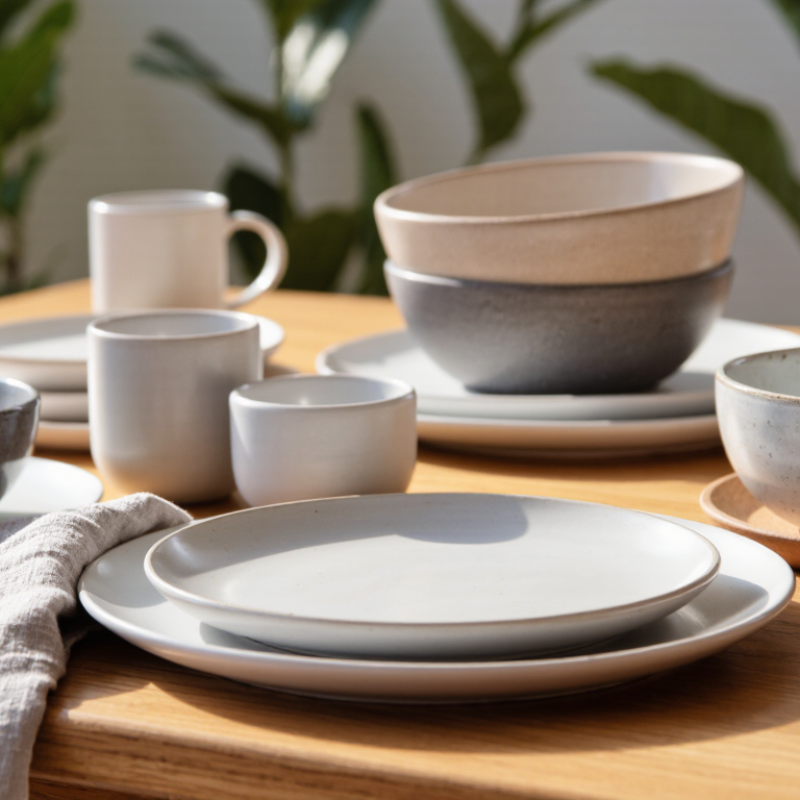
10 Tips for Choosing Sustainable Ceramic Tableware?

Define Sustainability in Ceramic Tableware

10 Tips for Choosing Sustainable Ceramic Tableware

Define Sustainability in Ceramic Tableware

Sustainability in ceramic tableware means examining its whole life, not just its appearance. Clay extraction, factory energy, glazing, packaging, shipping, use, and disposal all matter. A handmade plate may look responsible, but craftsmanship alone does not prove sustainability.

Check how the clay is sourced and processed. Recycled content can reduce pressure on raw materials, although it should be clearly verified. Kilns require intense heat, so efficient firing systems and renewable energy can lower environmental impact. Ask for measurable information, such as recycled percentages, energy practices, or environmental certifications. Vague claims deserve careful questions.

Durability is equally important. A strong plate that survives daily washing may prevent repeated purchases. Look for an even glaze, stable edges, and a practical weight. I once chose attractive ceramics with thin rims, and small chips appeared within months. That experience changed how I judge quality.

Sustainable choices also include safe materials and responsible working conditions. Food-contact surfaces should meet relevant safety requirements in the market where they are sold. Ethical production cannot be confirmed by color or texture. Request testing details when necessary. Packaging matters too. Minimal, recyclable protection is useful, but fragile tableware still needs enough cushioning to avoid waste from breakage.

No ceramic product is perfect. Local production may reduce transport, yet local kilns can still use fossil energy. Recycled clay may lower resource use, but availability and performance can vary. Good decisions come from transparent evidence, realistic use, and a willingness to question attractive assumptions.

Examine Clay Sources and Production Methods

Choosing sustainable ceramic tableware begins with the clay beneath your fingers. Ask where the clay was extracted, not merely where the plates were fired. Responsible suppliers should identify the region, mine, and processing facility. Local clay can reduce transport emissions, but distance alone proves little. I once inspected a workshop that advertised local materials. Its clay arrived from another province. That contradiction changed my checklist. Look for documented sourcing, land restoration plans, and clear water-use records. Reclaimed clay from trimming scraps can reduce waste, although it may require careful sorting. Mixed clay bodies sometimes weaken during firing. Ask for test results, not optimistic promises. Good evidence matters.

Production methods reveal the real environmental cost. Electric kilns powered by renewable energy may reduce emissions, while efficient firing schedules save energy. However, a kiln’s energy source should be verified. “Eco” is not enough. Check firing temperature, cycle length, and maintenance records. Lower-temperature firing can save energy, but it may reduce strength or limit safe glaze performance. The best choice balances durability with resource use. Inspect the glaze for pinholes, rough patches, or uneven coverage. These defects can signal poor control and shorten a product’s life. Ask whether wastewater is treated and glaze residues are recovered. Independent laboratory tests can confirm food-contact safety and regulated substance limits. Certification helps, but paperwork can become outdated. Request current documents and compare them with the actual factory process. I still find this difficult: suppliers rarely disclose every detail. That uncertainty deserves honest attention, not polished marketing.

10 Tips for Choosing Sustainable Ceramic Tableware? - Examine Clay Sources and Production Methods

No. Selection Tip What to Examine Practical Sustainability Guidance Useful Evidence
1 Check the clay source Ask whether the clay is locally or regionally sourced and whether the supplier can identify the mining area. Shorter transport distances can reduce transport-related emissions. Prefer suppliers that disclose the clay type, extraction location, and sourcing policy. Source disclosure
2 Look for recycled clay content Find out whether unfired production scraps and rejected unfired pieces are returned to the clay body. Reclaiming unfired clay reduces virgin material waste. Confirm the percentage of recycled content and whether it is measured by weight. Recycled-content data
3 Evaluate kiln energy Review the kiln fuel, electricity source, firing schedule, and whether the facility tracks energy per kilogram of finished ware. Electric kilns powered by verified renewable electricity can avoid direct combustion emissions at the facility. Energy intensity should be reported consistently per kilogram or per piece. Energy records
4 Consider firing temperature Identify whether the tableware is earthenware, stoneware, or porcelain and check the documented firing range. Higher-temperature firing generally requires more process energy, but durable stoneware and porcelain may offer longer service life. Compare durability and energy together rather than using temperature alone. Technical specification
5 Prioritize long service life Check resistance to chipping, cracking, thermal shock, staining, and repeated washing. A durable item used for many years can reduce replacement demand. Look for dishwasher and microwave suitability where relevant, but follow the maker’s care instructions. Durability testing
6 Verify glaze safety Ask for testing of glazed surfaces for lead and cadmium migration under applicable food-contact regulations. Food-contact ceramicware should comply with the requirements of the market where it is sold. Decorative or metallic finishes may require specific care and usage limitations. Migration test report
7 Choose responsible packaging Examine the amount of packaging, recycled fiber content, plastic use, and protection against breakage. Packaging should balance material reduction with adequate protection. Prefer right-sized recyclable paper-based packaging and avoid unnecessary mixed-material components. Packaging specification
8 Measure transport impact Review the production location, shipping mode, shipment consolidation, and packaging volume. Sea or rail freight generally has lower emissions per tonne-kilometer than air freight. Consolidated shipments and efficient packing can reduce transport impacts. Logistics data
9 Assess water and waste controls Ask how process water, glaze residues, dust, and fired rejects are handled. Prefer facilities that recirculate suitable process water, control ceramic dust, and document waste treatment. Glaze slurries and contaminated residues should not be discharged untreated. Environmental records
10 Plan for responsible end of life Determine whether the ceramic can be reused, repaired, repurposed, or accepted by a local recycling program. Most household recycling systems do not accept ceramic tableware because its composition and melting behavior differ from container glass. Reuse and repurposing are usually more practical than disposal. Local waste guidance

Compare Glazes, Materials, and Chemical Safety

Choosing sustainable ceramic tableware requires more than liking a matte finish. Material extraction has tripled since 1970, and the UN Environment Programme projects a further 60% rise by 2060. Durable products therefore matter. Tip 1: Choose stoneware or porcelain designed for daily use. Tip 2: Prefer thicker rims and stable bases. Tip 3: Avoid pieces with visible cracks or deep crazing. Tip 4: Ask whether the clay contains recycled material, without treating that claim as proof of sustainability.

Glaze safety deserves closer attention. Lead and cadmium can migrate from poorly formulated or damaged glazes, especially with acidic foods. The World Health Organization reported 1.5 million deaths linked to lead exposure in 2021. Tip 5: Request recent lead and cadmium migration results. Tip 6: Look for testing against EN 1388 or applicable food-contact methods. Tip 7: Treat “food-safe” as incomplete unless documentation identifies the test standard. Tip 8: Be cautious with unlabeled, decorative, or heavily worn pieces.

The US FDA Food Code 2022 describes food-contact surfaces as smooth, nonabsorbent, corrosion-resistant, and easily cleanable. Tip 9: Check the maker’s care instructions before using dishwashers or microwaves. Tip 10: Replace tableware when glaze flakes, exposes the body, or becomes difficult to clean. A low-impact choice is usually the item you will keep longest. Still, my checklist has limits: recycled content, firing energy, packaging, and transport can change the overall footprint. Ask direct questions, save test reports, and reconsider attractive claims that lack evidence.

Evaluate Durability, Care, and Product Lifespan

10 Tips for Choosing Sustainable Ceramic Tableware

Tip 1 Check the clay body and firing quality. Dense, fully fired ceramic resists chips, stains, and repeated washing.

Tip 2 Inspect the rim and base. Thin, uneven edges often fail first.

Tip 3 Choose pieces with practical weight. Extremely heavy plates use more material and increase handling damage.

Tip 4 Ask whether the glaze is tested for food contact and heavy metals. Reliable documentation matters more than attractive claims.

Tip 5 Match the set to your routine. Dishwasher-safe pieces reduce hand-washing time, but thermal shock still causes cracks.

Tip 6 Avoid sudden temperature changes. Do not move a cold plate directly into a hot oven.

Tip 7 Use non-abrasive cleaners and inspect hairline cracks regularly. Small damage can become unsafe or unusable.

Tip 8 Prefer replaceable individual pieces. Replacing one bowl is less wasteful than discarding an entire set. The European Commission’s Joint Research Centre identifies durability as an important lifecycle consideration in product environmental assessment.

Tip 9 Consider expected service life, not only purchase price. A durable plate used for ten years may create less environmental pressure than several cheaper replacements.

Tip 10 Check packaging and shipping protection. Breakage before use defeats a product’s sustainability claims. The UNEP Food Waste Index Report 2024 estimated 1.05 billion tonnes of food waste in 2022; durable tableware cannot solve food waste, but longer product use can reduce avoidable household consumption.

I still question glossy “eco” labels without test results. Claims need evidence.

Verify Certifications, Packaging, and Ethical Practices

10 Tips for Choosing Sustainable Ceramic Tableware

A credible sustainability claim starts with evidence, not earthy colors or kraft paper. Check whether the factory holds ISO 14001 certification for environmental management. Remember, ISO 14001 evaluates systems, not automatically the tableware itself. Ask for the certificate number, scope, issuing body, and expiry date. Product testing should cover glaze safety, durability, and heavy-metal migration. Independent laboratory reports are more useful than vague website promises.

I once treated a recycled-paper box as proof of sustainability. That was too simplistic.

Packaging deserves careful inspection. The OECD’s Global Plastics Outlook reports that packaging creates about 40% of global plastic waste. Choose molded paper, recycled cardboard, or reusable protection where practical. Ask whether coatings, foam inserts, and adhesives can be separated easily. UNEP’s 2023 Turning off the Tap report identifies packaging as the largest source of single-use plastic waste. Less packaging often matters more than decorative recycled content. Still, fragile ceramics need protection. Damaged goods create avoidable waste and transport emissions.

Ethical production requires questions beyond certifications. Request the supplier’s labor policy, audit frequency, and corrective-action records. Check whether workers receive safe kiln training, protective equipment, fair contracts, and timely wages. Traceability should reach the factory, not stop at a trading office. Energy data can reveal whether kiln improvements are real. Look for measured fuel use, renewable electricity records, or documented efficiency projects. Be cautious with perfect claims. Audits can miss problems, and certificates can expire. A supplier willing to share limitations may be more reliable than one offering flawless language.

FAQS

What does sustainability mean in ceramic tableware?

It considers the entire product life, from clay extraction to disposal. Energy, glazing, packaging, shipping, use, and durability all matter. Appearance proves very little.

How can I assess the clay and firing process?

Ask whether the clay includes verified recycled content. Check kiln energy use, firing efficiency, and renewable electricity records. Vague claims need questions.

Why is durability important?

Durable plates survive daily washing and repeated use. Look for dense ceramic, even glaze, stable rims, and practical weight. Thin edges may chip within months.

What food-safety information should I request?

Ask for testing on food-contact surfaces and glaze migration. Relevant safety requirements depend on the selling market. Attractive colors cannot confirm safety.

How should I care for ceramic tableware?

Avoid sudden temperature changes. Do not place a cold plate directly into a hot oven. Use gentle cleaners and inspect hairline cracks regularly.

Is dishwasher-safe tableware always a sustainable choice?

Not always. Dishwasher safety can reduce hand-washing time, but thermal shock may still cause cracks. A longer service life matters more than one feature.

What packaging is preferable for ceramic tableware?

Choose minimal, recyclable, or reusable protection where practical. Molded paper and recycled cardboard can reduce unnecessary material. Fragile pieces still need cushioning.

How can I judge ethical production claims?

Ask about worker safety training, protective equipment, contracts, wages, and audit frequency. Traceability should reach the factory. Perfect claims make me cautious.

Is local or recycled ceramic automatically better?

No. Local production may still use fossil energy. Recycled clay can reduce resource use, but quality and availability vary. Evidence beats assumptions.

Should I buy a complete set or individual pieces?

Replaceable bowls and plates can reduce waste. One broken item should not force disposal of the entire set. I still sometimes choose matching sets, perhaps too quickly.

Conclusion

Choosing Sustainable Ceramic Tableware requires looking beyond appearance and price. Start by defining what sustainability means to you, including responsible sourcing, lower-impact production, long product life, and safe materials. Investigate where the clay comes from and how it is processed, while considering whether the manufacturing methods reduce waste, energy use, and water consumption. Examine glazes carefully to ensure they are durable, food-safe, and free from concerning chemicals, especially for items used every day.

A responsible choice should also withstand regular washing, heating, and handling, since durable tableware reduces the need for frequent replacement. Review care instructions and consider the product’s expected lifespan before purchasing. Finally, look for credible certifications, minimal or recyclable packaging, transparent production information, and fair workplace practices. By evaluating materials, manufacturing, safety, durability, and ethics together, shoppers can select ceramic tableware that supports practical use and more responsible consumption.


Ethan

Ethan

Ethan is a highly skilled marketing professional with a deep understanding of the company’s products, customers, and industry landscape. Through years of experience in market research, content strategy, and customer communication, he transforms complex product information into clear, practical, and......