0%

Choosing among China’s top 10 Private Label Dinnerware manufacturers requires more than comparing glossy catalogs. A factory may display elegant porcelain plates, yet struggle with consistent glaze color, tight delivery schedules, or careful packaging. Buyers should examine production experience, material control, food-contact testing, minimum order quantities, and export performance. Small details matter. A chipped rim can damage an entire retail launch.

Retail analyst Neil Saunders has said that private label is no longer merely a cheap alternative; it can be a strategic choice. That view applies strongly to dinnerware. A capable manufacturer can help brands develop distinctive shapes, embossed logos, seasonal colors, and practical packaging. The strongest partners also support prototype approval, factory inspections, and transparent quality records. These steps reduce surprises after mass production begins.

This overview introduces ten Chinese manufacturers serving private-label dinnerware buyers. It considers ceramic expertise, customization capacity, design support, manufacturing scale, and international reliability. The list should not be treated as a final verdict. Supplier performance can change with management, equipment, raw material costs, and order volume. That is easy to overlook.

A serious buyer should request recent samples. Compare them under natural light. Check the foot ring, glaze finish, stacking stability, and carton protection. Ask for documented test results, not broad promises. Some manufacturers may excel at hotel-grade stoneware but lack flexible support for smaller brands. Others may offer creative design help but need stronger logistics planning. The right choice depends on your product vision, market, budget, and tolerance for production risk.
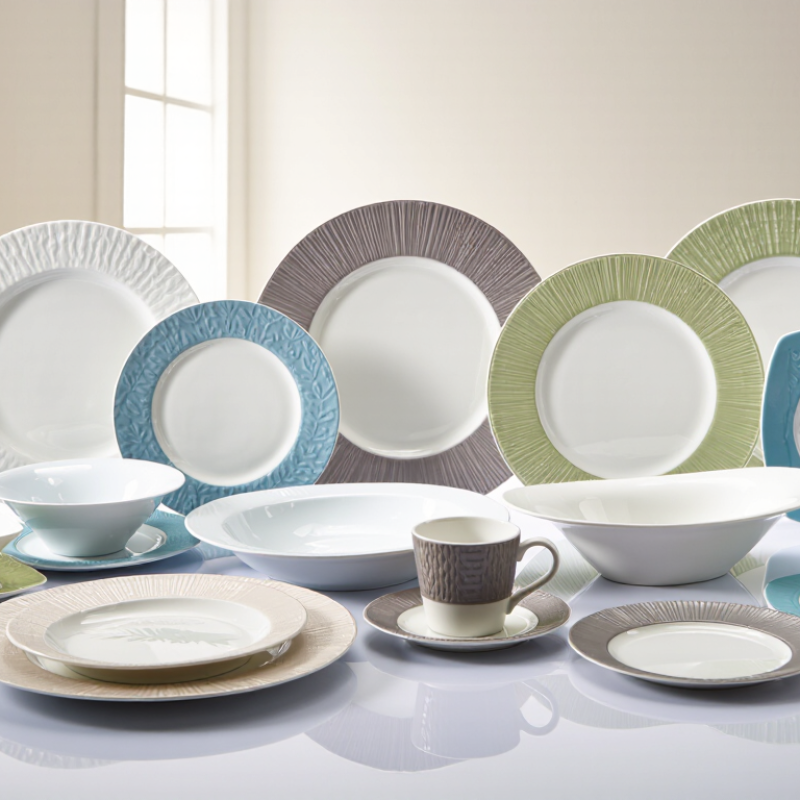
China Top 10 Private Label Dinnerware Manufacturers?

What Defines a Private Label Dinnerware Manufacturer in China

A private label dinnerware manufacturer in China does more than print a buyer’s logo. It develops, produces, inspects, and packs tableware under another company’s identity. The factory should offer material choices, such as porcelain, stoneware, or tempered glass. It should also adjust shapes, colors, glaze effects, packaging, and carton markings. Private label means controlled identity.

A credible top-ten shortlist needs more than attractive product photos. Buyers should check kiln capacity, monthly output, mold ownership, and experience with custom orders. A reliable manufacturer provides samples before mass production. It explains firing temperatures, glaze limitations, edge strength, and food-contact testing. The details matter. Inspection records should include dimensions, color consistency, pinholes, cracks, and stacking safety. Export packaging deserves equal attention. Corner protection, inner dividers, and drop-test results can prevent expensive breakage.

Communication reveals operational maturity. A professional supplier confirms drawings, tolerances, lead times, and approval points in writing. It should identify the production site clearly, rather than hiding behind a trading office. Samples can deceive. A polished sample may receive extra inspection. Buyers should compare pre-production samples with random pieces from a later batch. No factory is perfect, and even experienced manufacturers can miss a small glaze variation. That weakness should be acknowledged, measured, and corrected through documented quality procedures. Clearance documents, test reports, and traceable batch records further support dependable sourcing.

Key Criteria for Ranking China’s Top Ten Manufacturers

Ranking China’s top ten private label dinnerware manufacturers requires more than comparing catalog photos. A reliable review starts with factory experience. I examine years in production, export markets, material knowledge, and documented quality systems. Factory visits matter. A clean molding room and organized sample shelves reveal practical discipline.

Product quality needs measurable criteria. I compare clay composition, glaze consistency, firing temperature, edge strength, and water absorption. Each manufacturer should provide recent food-contact test reports from recognized laboratories. Samples also need repeated washing and impact checks. One attractive plate proves very little. I record defects, color variation, packaging damage, and replacement procedures. Small details often expose weak control.

Production capability affects private label performance. The ranking should consider mold development, decoration accuracy, minimum order quantities, lead times, and monthly capacity. Skilled teams can reproduce a logo or pattern across different shapes. Traceability is essential when batches change. Clear inspection records build trust with importers and retailers. Environmental practices deserve attention too, including waste handling, energy use, and responsible sourcing. A factory may meet specifications today yet struggle during peak season. That risk should lower its position. No ranking is perfect. Supplier communication can be excellent, while sample consistency remains disappointing. Careful buyers should request updated samples, verify documents independently, and score every criterion against their actual market needs.

China’s Top Ten Private Label Dinnerware Manufacturers

China’s Top Ten Private Label Dinnerware Manufacturers

China’s top ten private label dinnerware manufacturers are usually judged by more than factory size. In practical sourcing work, reliable suppliers show stable clay preparation, controlled glazing, and repeatable kiln firing. These details affect color, rim strength, and stacking performance.

Many leading manufacturers serve hotels, restaurants, retailers, and online sellers. Their facilities may produce porcelain, stoneware, ceramic, or vitrified dinnerware. Buyers should inspect sample plates under natural light. Small shade differences often appear after mass production. Ask for food-contact test reports, factory audit records, packaging samples, and recent production photos. Clear communication matters too.

Samples can mislead.

A strong manufacturer should explain minimum order quantities, mold charges, lead times, decoration methods, and replacement procedures. Screen printing, reactive glazing, and hand-finishing create different costs and quality risks. A detailed pre-production sample can prevent costly surprises.

The best ten suppliers are not always the cheapest. They usually maintain documented inspections from raw materials to carton loading. Check plate flatness, glaze pinholes, edge chipping, and carton drop resistance. Still, no shortlist remains perfect for every project. A factory suitable for a luxury hotel may not fit a small retail launch. That distinction is easy to overlook. Buyers should compare capacity, customization depth, communication speed, and verified compliance before choosing a long-term partner.

Product Ranges, Materials, and Customization Capabilities

China’s leading private label dinnerware manufacturers cover practical and premium product ranges. Common lines include dinner plates, side plates, bowls, mugs, serving platters, and complete tableware sets. Some factories also produce hotel collections, restaurant ware, and lightweight home-use designs. Product depth matters. A supplier with matching bowls and platters can simplify future purchasing.

Material selection shapes both performance and price. Porcelain offers a clean surface and reliable strength for daily dining. Stoneware provides heavier weight, earthy textures, and useful heat retention. Bone china feels lighter and more refined, but buyers should confirm composition and testing records. Tempered glass supports modern designs and easy cleaning.

Small details matter. Check glaze consistency, rim smoothness, stackability, and resistance to thermal shock.

Customization usually covers logo placement, decal printing, embossing, color matching, shapes, packaging, and set combinations. Experienced manufacturers should explain mold charges, minimum order quantities, sample stages, and production timelines clearly. Ask for food-contact documentation and inspection reports from recognized laboratories.

Factory visits or live production checks can reveal kiln control and packing standards. Photos alone are not enough. A supplier may look excellent on paper, yet sample quality can vary between batches. That uncomfortable gap deserves attention.

Some buyers also overlook carton testing, causing chipped rims during transport. Request a sealed pre-production sample, confirm approved colors, and record every specification before mass production.

Quality Control, Certifications, Pricing, and Export Services

China Top 10 Private Label Dinnerware Manufacturers?

When comparing China’s top private label dinnerware manufacturers, quality control should come before attractive pricing. In factory audits, inspect clay preparation, glazing, firing temperature, and edge finishing. Ask for production samples, not only showroom pieces. Test plates for lead, cadmium, thermal shock, and food-contact safety through an independent laboratory. A certificate alone is not proof. Batch records matter more.

Certifications should match the destination market. Common evidence includes ISO 9001 systems, food-contact test reports, and compliant packaging documents. Confirm whether reports cover the exact ceramic body and glaze. I have seen buyers accept an outdated report. That mistake creates delays. Pricing also needs careful review. Compare EXW, FOB, and delivered quotations separately. Include mold charges, sample fees, printing, inner boxes, inspection costs, and replacement allowances. The lowest unit price can hide weak packaging or a high defect rate.

Reliable export service includes clear production schedules, carton drop testing, barcode support, container loading photos, and complete customs documents. Ask how the manufacturer handles cracked pieces and short shipments. Written answers are useful. Video inspections can reveal crowded warehouses, uneven cartons, or poor pallet protection. Still, remote checks have limits. A local inspection before shipment remains sensible, especially for a first order. Choose suppliers that explain risks openly, accept measurable quality standards, and provide traceable corrective actions.

China Top 10 Private Label Dinnerware Manufacturers? – Quality Control, Certifications, Pricing, and Export Services
Rank Typical Production Cluster Primary Dinnerware Profile Common Materials Typical Private Label MOQ Indicative FOB Price Typical Lead Time Quality-Control Practices Relevant Compliance Documentation Export Services
1 Chaozhou, Guangdong High-volume ceramic and porcelain tableware for restaurants, hotels, retailers, and food-service distributors. Porcelain, stoneware, vitrified ceramic, decal-decorated ceramic 500–3,000 sets or equivalent mixed items Approximately US$2.80–8.50 per 5-piece place setting 35–60 days after artwork and sample approval Incoming clay inspection, moisture and density checks, sample approval, glaze inspection, dimensional checks, firing inspection, AQL final inspection, carton drop testing Food-contact test reports for lead and cadmium; FDA or EU test documentation when required; ISO 9001 may be available from individual factories OEM artwork, logo decals, gift boxes, barcode labels, mixed-container loading, inspection coordination, export documentation
2 Liling, Hunan Decorative porcelain and ceramic dinnerware with strong capability for printed patterns, hotel collections, and coordinated table settings. Hard porcelain, feldspathic porcelain, stoneware, underglaze and overglaze decoration 1,000–5,000 pieces per design Approximately US$3.20–10.00 per 5-piece place setting 40–65 days, depending on decoration complexity Color matching against approved samples, decoration registration checks, glaze-pinhole inspection, edge and foot-ring checks, packing inspection, random carton sampling Lead and cadmium migration reports; food-contact documentation for the destination market; social-audit reports may be arranged separately Custom artwork development, sample courier support, retail packaging, inner-box dividers, container consolidation, export packing lists
3 Tangshan, Hebei Large-scale hotelware and durable white-tableware production suitable for hospitality, catering, and institutional buyers. Hotel porcelain, alumina-reinforced porcelain, vitrified ceramic 1,000–10,000 pieces per item Approximately US$3.50–9.80 per 5-piece place setting 35–55 days for standard shapes Body strength checks, water-absorption testing, thermal-shock sampling, glaze inspection, stacking and nesting checks, quantity verification, pre-shipment inspection Food-contact test reports, thermal-shock or durability test data where applicable, ISO 9001 documentation from qualifying facilities Hotel project quotations, replacement-piece programs, palletized loading, container planning, multilingual shipping documents
4 Zibo, Shandong Cost-efficient ceramic tableware for supermarkets, restaurant chains, hospitality groups, and promotional programs. Stoneware, porcelain, ceramic, reactive-glaze products 500–3,000 pieces per style Approximately US$2.50–7.80 per 5-piece place setting 30–55 days after sample confirmation Raw-material verification, glaze-batch records, visual grading, warpage checks, dishwasher and microwave-use testing when specified, carton compression testing Lead and cadmium migration testing; FDA, EU, or other destination-market reports according to buyer requirements; BSCI audits may be available from selected suppliers Private-label stamping, sleeve and label production, assortment planning, mixed-SKU loading, third-party inspection support
5 Jingdezhen, Jiangxi Design-led porcelain and hand-finished dinnerware for premium retail, boutique hospitality, and specialty collections. Fine porcelain, bone china, hand-painted ceramic, carved porcelain 300–2,000 pieces per design Approximately US$5.50–18.00 per 5-piece place setting 45–75 days, depending on hand finishing Prototype approval, hand-decoration color control, shape consistency checks, gold or platinum trim inspection, surface defect grading, individual-piece packing checks Food-contact migration reports; precious-metal decoration restrictions reviewed for intended use; destination-market compliance file supplied by quotation Design modification, exclusive pattern development, premium gift packaging, sample sets, small-batch consolidation, export coordination
6 Dehua, Fujian White porcelain, sculptural tableware, and boutique private-label collections with strong small-to-medium batch flexibility. White porcelain, bone china, stoneware, embossed ceramic 300–2,500 pieces per design Approximately US$4.20–15.00 per 5-piece place setting 40–70 days, including mold development when needed Mold and prototype approval, wall-thickness checks, glaze uniformity inspection, handle and rim strength checks, AQL sampling, export-carton verification Lead and cadmium migration test reports; food-contact declarations where applicable; factory management certifications vary by supplier Custom molds, logo embossing, ceramic color matching, retail-ready packaging, small-order consolidation, document preparation
7 Foshan, Guangdong Modern ceramic dinnerware and coordinated kitchen-table collections aimed at contemporary retail and e-commerce channels. Stoneware, porcelain, ceramic, matte and reactive glazes 500–3,000 sets or 1,000–5,000 pieces Approximately US$3.00–11.50 per 5-piece place setting 35–60 days after final approval Digital artwork control, color and gloss checks, glaze adhesion inspection, dimensional tolerance checks, dishwasher and microwave testing when requested, drop-test sampling Destination-specific food-contact testing; lead and cadmium migration reports; packaging material declarations for applicable markets E-commerce packaging, barcode and carton-marking services, product photography coordination, fulfillment preparation, export consolidation
8 Shantou, Guangdong Fast-moving ceramic tableware and promotional dinnerware designed for value retail, food-service programs, and seasonal launches. Standard ceramic, stoneware, porcelain, printed ceramic 1,000–10,000 pieces per item Approximately US$2.20–7.20 per 5-piece place setting 25–50 days for existing molds and standard decoration Pre-production sample approval, production-line checks, print registration inspection, quantity and assortment verification, carton labeling checks, pre-shipment AQL inspection Lead and cadmium migration reports; FDA or EU testing according to the sales destination; supplier-specific factory audit records Low-cost packaging, promotional sets, mixed-SKU cartons, container booking support, commercial invoices and packing lists
9 Yongchun and Quanzhou, Fujian Small and medium-batch ceramic dinnerware for independent retailers, restaurants, hospitality projects, and online brands. Stoneware, porcelain, textured ceramic, handmade-look ceramic 300–2,000 sets or equivalent mixed items Approximately US$3.80–13.50 per 5-piece place setting 40–65 days, with additional time for custom molds Sample sign-off, glaze and texture consistency checks, rim and base inspection, color-lot control, packing-strength checks, random finished-goods inspection Food-contact migration reports; lead and cadmium testing; social-compliance audits and ISO documentation depend on the selected facility Mixed designs, custom color development, branded inserts, protective packaging, LCL and FCL export arrangements
10 Hunan, Guangdong, and Shandong Multi-Factory Sourcing Networks Flexible sourcing programs that combine ceramic, porcelain, glass, and complementary tableware for multi-category private-label collections. Porcelain, stoneware, ceramic, tempered glass, stainless steel accessories 500–5,000 pieces per SKU, subject to factory allocation Approximately US$3.00–16.00 per 5-piece equivalent set 45–80 days because of multi-factory coordination Approved-supplier qualification, consolidated pre-production samples, third-party laboratory testing, cross-factory color comparison, final random inspection, container loading supervision Product-specific food-contact reports; lead and cadmium migration testing for ceramic items; FDA, EU, UK, or other market documentation as specified by the importer One-window project management, multi-supplier consolidation, quality inspection, export documentation, retail packaging coordination, LCL and FCL shipping support

Note: Pricing is an indicative FOB benchmark for standard private-label orders and varies with material, size, decoration, packaging, testing, mold costs, order quantity, and shipping port. Certification and audit availability must be verified for the specific factory and product before purchase.

FAQS

What products can private-label dinnerware manufacturers usually produce?

Common products include dinner plates, side plates, bowls, mugs, platters, and complete tableware sets. Matching pieces simplify future orders. Some factories also make hotel, restaurant, and lightweight home collections.

Which dinnerware material suits everyday use?

Porcelain offers a smooth surface and dependable strength for daily dining. Stoneware feels heavier and retains heat well. Bone china is lighter, but composition records require checking. Tempered glass supports modern designs and easy cleaning.

What quality details should buyers inspect?

Check glaze consistency, smooth rims, stackability, and thermal-shock resistance. Inspect production samples, not only showroom pieces. Small flaws become expensive later. Look for uneven colors, rough edges, and tiny surface pinholes.

What customization options are commonly available?

Customization may include logos, decals, embossing, colors, shapes, packaging, and set combinations. Confirm artwork placement before production. Ask about mold charges, minimum quantities, sample stages, and timelines. Color matching can vary between batches.

How can buyers verify product safety and quality?

Request food-contact documents and independent laboratory reports. Reports should cover the exact ceramic body and glaze. Test for lead, cadmium, thermal shock, and food-contact safety. A certificate alone is not proof. Batch records matter.

How should buyers compare dinnerware quotations?

Compare EXW, FOB, and delivered prices separately. Include molds, samples, printing, inner boxes, inspections, and replacement allowances. The lowest unit price may hide weak cartons or high defect rates. I would question unusually cheap offers.

What packaging checks help prevent damaged dinnerware?

Request carton drop testing and a sealed pre-production sample. Review inner protection, pallet stability, and carton strength. Ask for loading photos before shipment. Cracked rims are a common warning sign.

How can buyers monitor production before shipment?

Factory visits or live video checks can reveal kiln control and packing standards. Local inspection remains sensible for a first order. Photos alone are not enough. Remote checks have limits. Record every approved specification and color.

Conclusion

China’s private label dinnerware industry offers a broad range of solutions for retailers, hospitality businesses, and foodservice distributors seeking customized tableware. A qualified Private Label Dinnerware manufacturer typically provides product development, mold or shape customization, logo application, packaging design, and flexible order quantities. Leading manufacturers are evaluated by their material selection, production capacity, design flexibility, consistency, delivery performance, and ability to support long-term cooperation.

This overview introduces ten leading types of manufacturers in China based on their product ranges, customization capabilities, and export services, without focusing on specific brand names. Their offerings may include porcelain, ceramic, stoneware, bone china alternatives, glass, and other durable materials in various styles and finishes. Attention is also given to quality control systems, product testing, international certifications, pricing structure, packaging protection, shipping coordination, and after-sales communication. Together, these factors help buyers compare suppliers and select reliable partners for distinctive, compliant, and cost-effective dinnerware collections.


Ethan

Ethan

Ethan is a highly skilled marketing professional with a deep understanding of the company’s products, customers, and industry landscape. Through years of experience in market research, content strategy, and customer communication, he transforms complex product information into clear, practical, and......