Choosing an ODM Ceramic Manufacturing partner can shape a product’s quality, cost, and market reputation. Global buyers need more than attractive factory photographs. They need evidence.
A reliable supplier should demonstrate clay expertise, stable firing control, accurate glazing, and repeatable production. It should also explain mold ownership, sampling fees, minimum order quantities, packaging standards, and inspection procedures. Small details matter. A hairline crack near a cup handle can become a costly retail complaint.
Bernard Leach, a respected ceramic artist and writer, once wrote, “The potter’s wheel is the pivot of the world.” His words still feel relevant. Every successful ceramic product begins with disciplined material control and thoughtful design decisions.
This guide reviews seven ODM Ceramic Manufacturing companies serving international buyers. Each company is considered through practical criteria, including customization depth, factory experience, quality assurance, production capacity, communication, and export readiness. We also consider whether suppliers can support a complete product journey, from sketches and prototypes to final cartons.
No ranking is permanent. Supplier performance can change with management, equipment, or workload. That limitation deserves attention. A polished website cannot replace a verified sample, factory audit, or clear production agreement.
Some buyers may prioritize low prices. Others may need refined hotel tableware, handmade textures, or food-safe dinnerware with consistent colors. The best choice depends on the product’s real demands. This comparison aims to make that decision more informed, cautious, and commercially practical.
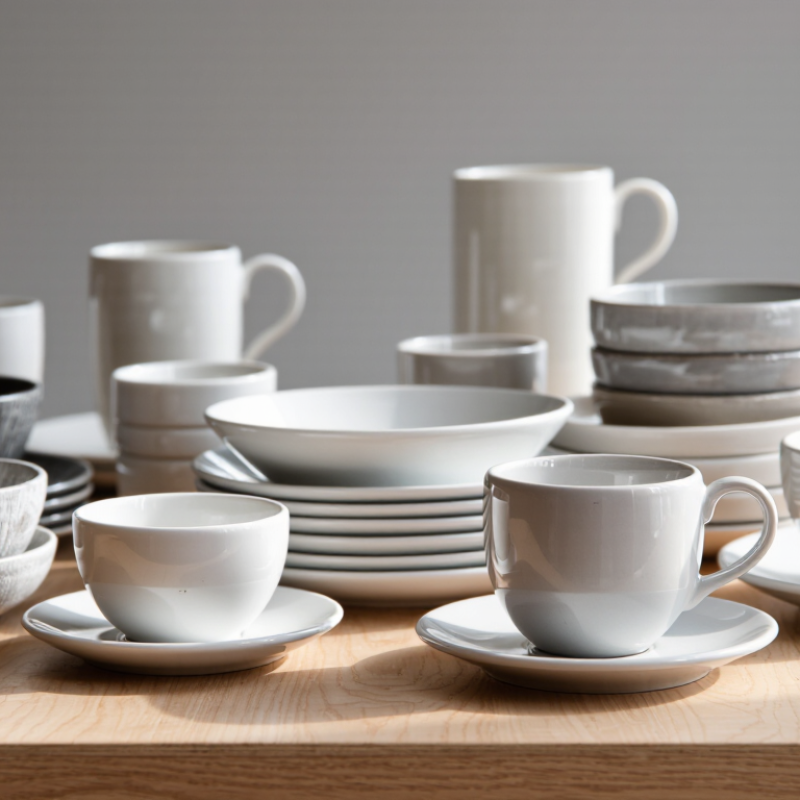
7 Best ODM Ceramic Manufacturing Companies for Global Buyers
Ceramic ODM means the factory develops your product, not merely reproduces a drawing. Buyers should review clay composition, mold ownership, glaze samples, packaging, and production controls. A useful trial includes three fired samples, dimensional checks, and a written defect limit. Small changes matter.
Firing commonly reaches 1,200–1,400°C for stoneware and porcelain, but temperature alone does not prove quality. Kiln atmosphere, heating speed, holding time, and cooling control affect color, strength, shrinkage, and warpage. The European Commission’s Ceramics BREF identifies firing as a major energy-consuming stage. Its guidance supports checking kiln efficiency and emissions controls during supplier audits. Ask for firing curves, test results, and batch traceability.
Market evidence also supports careful supplier selection. Fortune Business Insights valued the global ceramics market at about US$223.8 billion in 2023, with continued growth forecast through 2032. That scale increases production options, but it can hide uneven engineering practices. An ODM may promise mass production too quickly. That is a warning. Request pilot production before tooling approval, then compare fired dimensions against the approved sample. ISO 9001 certification, independent laboratory testing, and documented corrective actions add credibility, though none replaces a physical inspection. Even experienced buyers sometimes underestimate glaze variation between kiln loads. That mistake deserves a second review.
| No. | ODM Capability Profile | Main Ceramic Materials | Typical Firing Range | Design and Engineering Scope | Common MOQ Benchmark | Typical Production Lead Time | Best-Fit Buyer Applications |
|---|---|---|---|---|---|---|---|
| 1 | Tableware ODM Specialist |
Porcelain, stoneware, fine stoneware Suitable for plates, bowls, mugs, and serving pieces. |
Approximately 1,200–1,400°C, depending on body formulation and glaze system. | Shape development, glaze matching, decal placement, handle design, mold development, and pre-production samples. | Commonly 1,000–5,000 pieces per SKU for customized mass production. | Approximately 45–90 days after artwork, tooling, and specifications are approved. | Restaurants Hotels Retail tableware Private labels |
| 2 | Decorative Ceramic ODM Specialist |
Earthenware, stoneware, porcelain Material selection depends on the desired surface, weight, and price target. |
About 1,050–1,300°C for many decorative ceramic bodies; porcelain generally requires higher temperatures. | Original form design, textured surfaces, hand-applied effects, color development, sculpting, and packaging coordination. | Usually 500–3,000 pieces per design, with higher quantities preferred for complex hand-finishing. | Approximately 50–100 days, including prototype approval and decorative finishing trials. | Home décor Giftware Seasonal collections Interior projects |
| 3 | Sanitaryware ODM Specialist |
Vitreous china, sanitary porcelain, fireclay Bodies are formulated for strength, water resistance, and dimensional stability. |
Generally 1,200–1,280°C for vitreous china and related sanitary ceramic bodies. | Product engineering, CAD modification, mold design, hydraulic optimization, glaze selection, and dimensional validation. | Often 100–1,000 units per model because tooling and product dimensions are substantial. | Approximately 60–120 days, depending on tooling complexity and testing requirements. | Washbasins Toilets Bidets Bathroom projects |
| 4 | Technical Ceramic ODM Specialist |
Alumina, zirconia, steatite, cordierite Material choice is determined by thermal, electrical, mechanical, and chemical requirements. |
Commonly 1,300–1,800°C; exact temperature varies significantly by ceramic composition. | Material formulation, precision forming, sintering development, CNC finishing, tolerance analysis, and application testing. | Often 100–10,000 components, depending on geometry, tolerances, and tooling method. | Approximately 8–20 weeks for qualified production; prototypes may require additional engineering time. | Electrical insulation Wear parts Sensors Industrial equipment |
| 5 | Architectural Ceramic ODM Specialist |
Porcelain tile, glazed tile, terracotta, stoneware Selection depends on water absorption, slip resistance, and intended installation area. |
Typically 1,150–1,250°C for many tile and architectural ceramic products. | Surface pattern development, color matching, relief design, module planning, technical drawings, and installation system coordination. | Commonly 1,000–10,000 m² or equivalent production volume for project-based customization. | Approximately 45–90 days after technical approval and production scheduling. | Wall finishes Flooring Façades Commercial interiors |
| 6 | Kitchen and Food-Contact Ceramic ODM Specialist |
Porcelain, stoneware, alumina-reinforced ceramic The selected body must support repeated heating, washing, and food-contact use. |
Approximately 1,200–1,400°C for many durable food-contact ceramic bodies. | Stackability design, thermal-shock evaluation, glaze development, food-contact decoration, lid and accessory matching, and packaging design. | Usually 1,000–5,000 pieces per SKU for customized consumer products. | Approximately 45–90 days, excluding regulatory testing and extended sample evaluation. | Bakeware Kitchenware Catering Food-service products |
| 7 | High-Volume Ceramic Gift and Promotional ODM Specialist |
Earthenware, stoneware, porcelain The body is selected according to target cost, appearance, decoration, and delivery volume. |
Approximately 1,050–1,400°C, depending on the ceramic body and decoration method. | Logo placement, custom shapes, rapid sampling, color matching, gift-set configuration, barcode labeling, and export packaging. | Commonly 3,000–50,000 pieces per order, particularly for standardized promotional formats. | Approximately 30–75 days after final sample approval and deposit confirmation. | Corporate gifts Promotional items Event merchandise Retail campaigns |
Ceramic ODM means the factory helps develop the product, not merely copies a drawing. It may adjust the clay body, mold, glaze, and production method. Small changes matter. Confirm mold ownership before production begins.
Stoneware and porcelain often fire between 1,200°C and 1,400°C. Temperature alone does not prove quality. Heating speed, kiln atmosphere, holding time, and cooling also affect results. A firing curve gives better evidence.
Request at least three fired samples before approving tooling. Check dimensions, weight, glaze color, warpage, and edge condition. Compare every sample with the approved reference piece. One attractive sample proves very little.
Review clay composition, glaze samples, mold ownership, packaging, and defect limits. Ask for a pilot production run before approving large tooling. Compare fired dimensions against the approved sample. Do not rush this step.
Request first-pass yield records from at least three recent batches. First-pass yield measures conforming products before rework. Ask how defects were classified and corrected. Incomplete data deserves caution.
A lower minimum order quantity can support a controlled pilot. However, low volume is useful only when quality remains repeatable. Check lead time, yield, and inspection records together. Cheap trials can still hide problems.
No. A sampling level, such as an acceptance limit of 1.5, is not a defect guarantee. Sample size and acceptance numbers depend on the lot and inspection level. Review dimensional checks, glaze defects, packing photos, and corrective actions.
Request recent laboratory reports for the intended product and use. Testing may cover food contact, heavy metals, thermal shock, impact, and water absorption. Check report dates, tested materials, and sample descriptions carefully. A certificate alone is insufficient.
Look for separated raw materials, calibrated kilns, readable lot labels, and clean packing areas. Ask to see batch records, glaze formulas, and inspection plans. Check whether corrective actions are documented. A tidy showroom proves little.
Kiln atmosphere, temperature control, cooling speed, and glaze composition can change the final color. Even experienced buyers sometimes underestimate variation between kiln loads. Approve a color range, not only one ideal piece. Recheck after mass production.
This guide explains how ODM Ceramic Manufacturing supports global buyers from concept development through mass production. It covers the ceramic process, including 1,200–1,400°C firing, material selection, mold development, surface finishing, and design adaptation for different markets. Buyers will also learn how suppliers are evaluated through practical factors such as minimum order quantity, lead time, production yield, inspection procedures, and ISO 2859-1 AQL 1.5 quality standards.
The comparison focuses on seven types of leading ODM suppliers without relying on brand promotion. It examines kiln technology, monthly production capacity, defect-rate control, customization options, pricing structures, MOQs, and delivery performance. The guide also highlights important compliance considerations, including FDA, LFGB, Prop 65, ASTM, and ISO 9001 requirements. Together, these benchmarks help importers, retailers, and product developers identify reliable manufacturing partners, reduce production risks, and select an ODM ceramic solution that balances quality, scalability, cost, and international market readiness.