Ceramic Laser Engraving can mark tiles, sanitaryware, and decorative pieces with fine text, patterns, or identification codes. In China, manufacturers offer machines with different laser sources, working areas, and automation options. The right choice depends on the ceramic, the required mark, and daily production volume. A compact unit may suit a design studio, while a larger system may better support repeated factory work. That matters.
A polished sample is useful, but it does not tell the whole story. Ask suppliers to test your own ceramic, including its glaze and surface finish. Check the mark’s contrast, edge clarity, and consistency across several pieces. Request specifications for laser power, motion accuracy, extraction, software, maintenance, and operator training. Then compare the details. A sample tile can reveal more than a brochure.
This guide looks at China’s ceramic laser engraving machine manufacturers through practical selection criteria, rather than rankings alone. It considers product range, customization, technical support, and evidence behind performance claims. Buyers should verify each point directly; supplier descriptions can be incomplete, and some specifications are difficult to compare. No catalog tells everything. Careful testing helps narrow the options, though even a good test may not reflect every production condition. That uncertainty deserves attention.
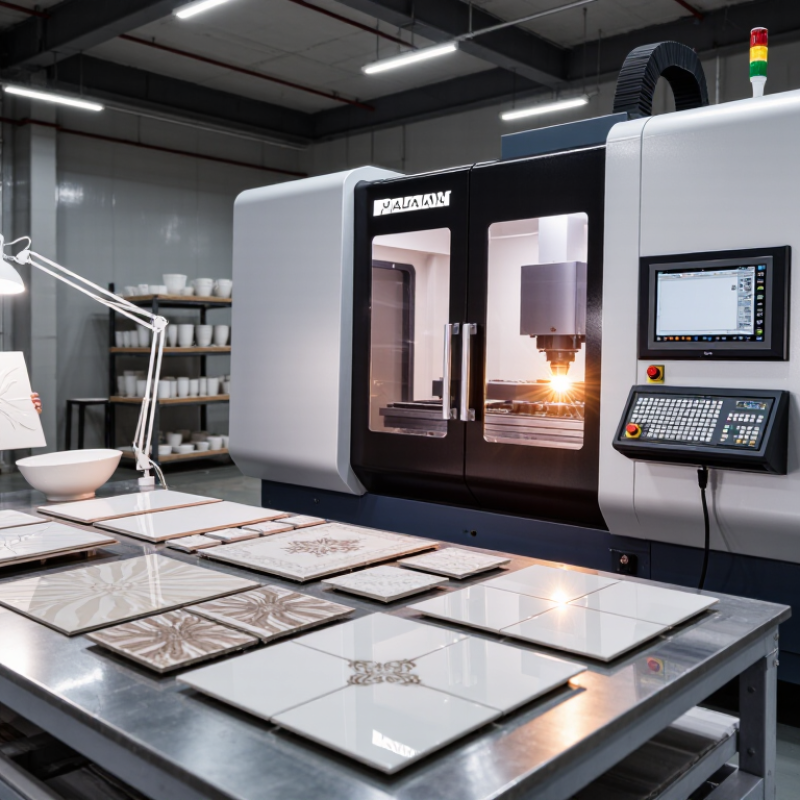
A ceramic laser engraving machine uses a focused beam of light to create text, patterns, or codes on ceramic surfaces. Depending on the ceramic and laser type, the beam may remove a thin layer, alter the glaze, or create a visible color change. The result is usually a precise, permanent mark without a cutting tool touching the piece. That matters. Ceramic is hard, but it can crack under uneven heat or pressure.
Machine setup depends on the material. A glazed tile may respond differently from an unglazed cup, even when both look similar. Operators adjust power, speed, focus, and line spacing, then test on a spare piece. A small test patch can reveal scorching, weak contrast, or tiny chips before a full design is run. There is no universal recipe. One caveat: “engraving” is sometimes used loosely; some machines mark the surface without removing meaningful material. That distinction affects depth, appearance, and durability. For consistent results, buyers should check sample marks on their own ceramic type and review the machine’s working area, cooling needs, and software compatibility.
How Ceramic Laser Engraving Technology Works
A ceramic laser engraving machine directs a focused beam onto a tile, mug, or technical ceramic part. The beam’s energy interacts with the material’s surface. Depending on the ceramic and its finish, it may remove a thin coating, alter the glaze, or create a visible color change. The result can be a fine line, a small logo, or a textured pattern. It is not magic. The same settings can produce different marks on two similar-looking tiles.
Operators adjust focus, power, speed, and pulse frequency to control the mark. A beam that moves too slowly may darken or crack a delicate glaze. Too little energy can leave a faint, uneven image. Test on a spare piece first, and inspect the edges under good light. Some ceramics respond poorly without a suitable surface treatment, so results should be verified rather than assumed. Even careful setup can need adjustment.
Tips: Clean the surface and secure the workpiece before engraving. Keep the focus consistent. Small tests matter. Use suitable ventilation and eye protection, and follow the machine’s operating guidance. A slightly imperfect first mark can reveal where the process needs refining.
Laser engraving directs concentrated light onto a ceramic surface to create a mark through localized heating, material removal, or a surface-color change. Typical wavelengths shown are 10.6 µm for CO₂ lasers, 1.064 µm for fiber lasers, and 0.355 µm for UV lasers. The best choice depends on the ceramic composition, surface finish, and any glaze or coating; wavelength alone does not determine engraving quality.
Chinese ceramic laser engraving machines are best judged by how well they handle different surfaces, not by headline wattage. Glazed tiles, alumina parts, and zirconia components absorb laser energy differently. A suitable system offers adjustable power, pulse frequency, and scanning speed, helping operators control contrast and limit chipping. UV or ultrashort-pulse sources can reduce heat impact on delicate work, though results depend on the ceramic and coating. A camera, autofocus, and stable fixture also help keep fine marks aligned across repeated parts. Small details matter.
MarketsandMarkets’ 2024 Laser Processing Market report estimates growth from USD 6.7 billion in 2024 to USD 10.4 billion by 2029. This is market context, not proof that every machine delivers the same results. Ask suppliers for test samples made from your own ceramic, then inspect edge quality, mark depth, and consistency under magnification. Glossy glaze can still produce uneven contrast. That deserves a real production trial.
Tips: Clean the surface before testing. Record power, speed, and frequency for each material batch. Keep a sample log; it makes repeat orders easier, although it adds setup time. Check extraction and enclosure features, too. A neat sample is not enough.
Leading Ceramic Laser Engraving Machine Manufacturers in China
China’s ceramic laser engraving machine manufacturers serve workshops and larger production lines, but “leading” should mean more than a polished catalog. Look for suppliers who can explain laser type, working area, focus adjustment, and material limits in plain language. Ceramic surfaces vary: a glazed tile may mark differently from an unglazed cup. Ask for test pieces made from your own material, with settings and results recorded. Small details matter. A clear sample reveals edge quality, contrast, and whether fine lettering stays legible.
Compare repeatability, not just maximum speed. Ask how the machine handles curved objects, positioning, dust control, and routine lens cleaning. Request a live demonstration and check whether the operator can reproduce the same mark across several pieces. No machine is perfect. A short demo can look convincing, yet production work may expose inconsistent fixtures or difficult setup. That gap matters. Also review training, spare-part availability, and response times before ordering. I would still treat any performance claim as a starting point, not proof; a practical trial on your actual ceramic products is more useful.
China Top Ceramic Laser Engraving Machine Manufacturers?
How to Choose a Chinese Ceramic Laser Engraving Machine Supplier
Choosing a Chinese ceramic laser engraving machine supplier starts with your own material, not a catalogue. Glazed tiles, alumina components, and curved tableware can respond differently to heat. Ask shortlisted suppliers to test your actual parts. Record line width, edge chipping, contrast, and cycle time. Looks can deceive. Request repeat tests across several pieces, not one polished sample. Fortune Business Insights valued the global laser marking market at USD 3.3 billion in 2023. That growth signals wider adoption, but it does not prove any supplier’s process capability.
Check whether the machine suits your required ceramic thickness, working area, and daily production volume. Ask for a written list of laser source, lens, control system, and included safety features. ISO 11553-1:2020 sets safety requirements for laser processing machines; ask how the supplier addresses guarding and operating procedures. Request manuals, operator training, spare-parts availability, and a clear warranty response time. Compare the full delivered cost, including installation and extraction equipment. A low quotation may omit useful details. I would also ask for a short production trial, since a successful demonstration can still leave maintenance questions unanswered.
| Evaluation Dimension | Weight | What to Check | Evidence to Request | Practical Evaluation |
|---|---|---|---|---|
| Material and process suitability | 20% | Confirm that the proposed laser process suits the exact ceramic type, surface finish, color, and any glaze or coating. Marking results can vary substantially between materials. | Trials using customer-supplied samples; photos or videos of the same material and finish; written details of the laser source and process settings used. | Accept only after reviewing the actual sample result. Check contrast, edge quality, readability, and any cracking, chipping, or unwanted surface damage. |
| Laser configuration and application fit | 15% | Match the proposed laser type, power, scanning head, lens, and work area to the intended marking or engraving task. No single configuration is suitable for every ceramic application. | Machine configuration list; explanation of why the selected laser source is appropriate; working-area dimensions; details of optional rotary or positioning equipment if needed. | Compare the proposed configuration against the part dimensions, surface geometry, required mark, and expected production volume. |
| Sample quality and acceptance criteria | 15% | Define measurable requirements before ordering, including mark size, position, contrast, legibility, cycle time, and acceptable surface condition. | Signed sample approval record; test parameters; agreed inspection method; representative samples from multiple parts or batches where applicable. | Use written pass/fail criteria rather than relying only on a demonstration video or verbal promise. |
| Productivity and repeatability | 10% | Assess actual cycle time, loading method, positioning accuracy, repeatability, and the effect of part variation on production. | Timed production trial; sample run records; details of fixtures, automation, and part-positioning methods. | Request a test using a representative batch and operating conditions, not only a single carefully positioned sample. |
| Machine safety and compliance | 10% | Check laser enclosure, interlocks, emergency stop, warning labels, fume or dust control, and electrical safety provisions. Requirements depend on the destination market and installation. | Safety documentation; machine risk assessment; details of guarding and extraction provisions; applicable conformity documents for the intended market. | Confirm the delivered configuration and documentation meet the requirements that apply at the installation site. Do not treat a certificate alone as proof of safe installation. |
| Quality control and traceability | 10% | Review inspection procedures for key components, assembly, calibration, and final machine testing. | Factory acceptance test checklist; inspection records; serial-number and component traceability information; pre-shipment test report. | Agree on the factory acceptance test and required records before production or shipment. |
| Warranty and after-sales support | 8% | Clarify warranty duration, covered parts, exclusions, response channels, troubleshooting support, and the process for replacement parts. | Written warranty terms; support contact details; spare-parts list; service response commitments; remote-support procedure. | Check whether support is available in the buyer’s time zone and whether common consumables and replacement parts can be obtained. |
| Training and documentation | 5% | Confirm the scope of operator and maintenance training, software instructions, setup guidance, and troubleshooting documentation. | User manual; installation checklist; training agenda; sample maintenance schedule; available documentation languages. | Verify that the intended operators can complete setup, routine operation, and basic maintenance using the supplied materials. |
| Delivery, installation, and commercial terms | 5% | Review lead time, packaging, shipping responsibilities, installation requirements, payment milestones, and the agreed delivery terms. | Written quotation; equipment and accessory list; packing plan; delivery schedule; installation scope; agreed shipping and payment terms. | Make sure the quotation identifies the complete machine configuration and clearly lists items that are excluded. |
| Total evaluation weight | 100% | Use the same criteria for each supplier under consideration. Record evidence and unresolved questions alongside each assessment. | ||
Selection note: Laser marking performance on ceramics depends on the material composition, glaze or coating, surface condition, and process settings. Ask each supplier to test the actual workpiece and document the agreed acceptance criteria before placing an order.
Glazed tiles, alumina parts, and curved cups can react differently to heat. A sample made from your material shows real edge quality and contrast.
Note line width, edge chipping, contrast, and cycle time. Keep the settings, too. One attractive sample proves little.
Ask for repeated marks across several pieces. Check whether lettering stays legible and positioning remains consistent. Small differences can matter in production.
Not always. Ask how it positions curved objects and whether its fixtures suit your products. A cup may need different support than a flat tile.
Ask for the laser source, lens, control system, working area, and supported ceramic thickness. Also confirm which safety features are included.
No. A short demonstration may hide setup or fixture problems. Request a practical production trial. A demo is not proof.
Check operator training, manuals, spare-part availability, and warranty response times. I would still ask who handles routine maintenance questions.
Compare the full delivered cost, including installation and extraction equipment. A low price may leave useful items out, so check carefully.
A Ceramic Laser Engraving machine uses a focused laser beam to mark or decorate ceramic surfaces with text, patterns, or images. The process directs controlled laser energy onto the material, creating a visible change in its surface or finish. Suitable settings depend on the ceramic type, coating, design, and desired level of detail, so testing and careful adjustment are important.
Chinese-made machines are available in different configurations, with options such as varied working areas, power levels, control systems, and automation features. Manufacturers may serve applications ranging from small workshops to larger production lines, but capabilities and support can differ. When comparing suppliers, consider machine specifications, compatibility with your materials, sample results, operating instructions, warranty terms, spare-parts availability, and after-sales service. Requesting a demonstration or test engraving can help you assess quality and determine whether a machine meets your production needs.