Why Choose Stoneware Tableware for Global Buyers?
Global buyers are seeking tableware that performs beyond the showroom. Stoneware Tableware offers a practical balance of durability, thermal stability, and visual character. A hotel breakfast plate may face repeated dishwasher cycles, stacked storage, and sudden temperature changes. A retail mug must also survive long-distance shipping, where small glaze defects can become costly returns. Grand View Research valued the global ceramic tableware market at approximately USD 10.7 billion in 2023, with continued growth expected through 2030. Its analysis highlights hospitality expansion, household replacement demand, and premium product design as major drivers.
Ceramic materials specialist Tony Hansen, founder of Digitalfire, states, “Stoneware is a firing range, not a color or style.” That distinction matters. Buyers should assess firing temperature, water absorption, glaze stability, and food-contact test results. Appearance alone is not enough. Reports from the European Commission and the U.S. Food and Drug Administration emphasize controls for lead and cadmium migration in ceramic foodware. These standards support safer sourcing, but documentation still requires careful verification from each factory.
Stoneware can reduce replacement pressure when properly formulated and fired. However, it is not automatically indestructible. Some pieces chip easily. Others vary slightly in color between production batches. That imperfection deserves honest discussion. Responsible suppliers should provide technical specifications, sample-testing records, packaging details, and traceable quality checks. For global buyers, the strongest choice is not simply the heaviest plate. It is Stoneware Tableware with tested performance, consistent production, and a design customers will continue using.
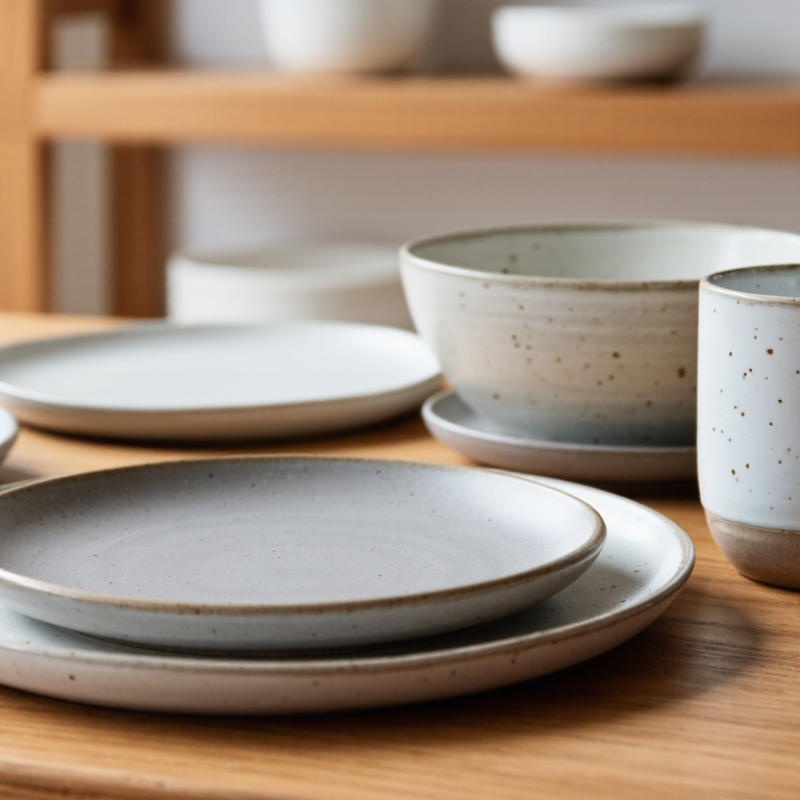
Stoneware tableware is ceramic tableware made from refined clay, minerals, and water. Manufacturers shape the clay, dry it, and fire it at a relatively high temperature. This process creates a dense, durable body with a slightly heavier feel than porcelain.
Its surface usually receives a glaze before a second firing. The glaze adds color, texture, and protection against stains. Some stoneware has a smooth white finish, while other pieces show speckles, uneven edges, or earthy tones. These small variations can indicate handmade character, but they may also create consistency concerns for global buyers.
In practical sourcing work, buyers should review the clay body, firing temperature, glaze safety documents, and water absorption results. Durability matters, but stoneware is not unbreakable. A sudden change from a hot oven to a cold surface may cause thermal shock. Dishwasher and microwave suitability also depends on the design, glaze, and manufacturer’s testing. Check the product specification.
Weight deserves attention. A thick stoneware plate feels substantial, yet it may increase shipping costs and storage pressure. A thinner design saves space but can feel less resistant during commercial use. Buyers should request samples, inspect the foot ring, and test stacking before placing larger orders. This step may feel slow. It often prevents expensive surprises.
| Evaluation Dimension | Stoneware Tableware | Porcelain Tableware | Earthenware Tableware | Melamine Tableware | Key Consideration for Global Buyers |
|---|---|---|---|---|---|
| Material Definition | A clay-based ceramic fired at a relatively high temperature, producing a dense, strong, and usually non-porous body. | A fine ceramic made from refined materials and typically fired at a higher temperature than stoneware. | A porous ceramic generally fired at a lower temperature and often covered with a glaze. | A molded thermosetting plastic material rather than a ceramic. | Material composition affects durability, appearance, care requirements, and market positioning. |
| Typical Water Absorption | Low Commonly below 3% when properly vitrified; the exact value depends on the formulation and firing process. |
Very low Often below 0.5% for fully vitrified porcelain. |
Higher Porosity is generally greater, although glaze can seal the surface. |
Very low Does not absorb water like porous ceramic bodies. |
Lower absorption generally supports easier cleaning and better resistance to moisture penetration. |
| Durability in Daily Use | Good Dense construction provides reliable resistance to normal household and foodservice use. |
Very good Dense and hard, but edges may still chip or break when dropped. |
Moderate More vulnerable to chipping, cracking, and thermal stress than denser ceramics. |
Good Lightweight and impact-resistant, but the surface can scratch or stain over time. |
Product thickness, rim design, glaze quality, and firing consistency are also important. |
| Heat Retention | Good Its relatively thick and dense body helps retain food temperature. |
Moderate to good Performance varies with body thickness and design. |
Moderate Generally lighter and less dense than stoneware. |
Limited Not designed to provide the same heat-retention characteristics as ceramic tableware. |
Useful for restaurants, catering, and home dining where food presentation and serving temperature matter. |
| Microwave Compatibility | Often suitable Use only when the item is tested and labeled microwave-safe; metallic decoration is not suitable. |
Often suitable Follow the manufacturer’s instructions, especially for decorative finishes. |
Model-dependent Glaze, decoration, and manufacturing quality affect suitability. |
Generally unsuitable Melamine tableware should not be used for heating food in a microwave. |
Country-specific labeling and safety documentation should be checked before shipment. |
| Dishwasher Compatibility | Often suitable Confirm the product specification and ensure decorative details are dishwasher-resistant. |
Often suitable Gold, silver, or other metallic decoration may require hand washing. |
Model-dependent Repeated cycles may affect fragile glazes or decorations. |
Usually suitable High heat and harsh detergents may reduce surface life over time. |
Clear care instructions reduce returns and support consistent customer use across markets. |
| Appearance and Design Flexibility | High Supports reactive glazes, matte finishes, natural textures, earthy colors, and handmade-style designs. |
High Often associated with refined shapes, bright whiteness, and detailed decoration. |
High Can offer colorful, rustic, and decorative styles. |
Moderate to high Available in many colors and patterns, but the visual character differs from ceramic. |
Stoneware is well suited to modern rustic, casual dining, and lifestyle-oriented collections. |
| Weight and Handling | Medium to heavy Typically heavier than thin porcelain and melamine. |
Light to medium Thin porcelain can be relatively lightweight while remaining strong. |
Medium Weight varies according to body thickness. |
Light Convenient for outdoor dining, catering, and high-volume handling. |
Weight influences freight cost, carton design, worker handling, and customer expectations. |
| Thermal Shock Consideration | Moderate Can crack when exposed to sudden extreme temperature changes, especially if damaged. |
Moderate to good Performance depends on the body, shape, glaze, and manufacturing quality. |
Lower Porous bodies and some glazes can be more sensitive to rapid temperature changes. |
Good for normal use It does not behave like ceramic but should still be kept away from excessive heat. |
Avoid placing cold or wet tableware directly into extreme heat unless the product is specifically designed for it. |
| Food Contact Considerations | Suitable when compliant Glazes and decorations must meet the food-contact requirements of the destination market. |
Suitable when compliant Food-contact safety depends on the body, glaze, pigments, and production controls. |
Suitable when compliant Glaze integrity and regulatory testing are particularly important. |
Suitable when compliant Use only for intended food-contact applications and follow temperature limitations. |
Buyers should request relevant test reports, declarations, and traceability documents for the target market. |
| Sustainability Profile | Reusable ceramic Long service life can reduce replacement frequency, but production requires mineral raw materials and high-temperature firing. |
Reusable ceramic Durable and reusable, with similar energy considerations related to firing. |
Reusable ceramic Reusable but may require more frequent replacement if it chips or cracks easily. |
Reusable plastic Lightweight and reusable, but disposal and recycling options vary by market. |
A complete assessment should consider service life, packaging, transport weight, energy use, and end-of-life options. |
| Best-Fit Applications | Daily home dining, restaurants, cafés, hotels, casual entertaining, and lifestyle collections. | Formal dining, hospitality, banqueting, premium foodservice, and fine presentation. | Decorative home use, casual dining, and applications where lower-cost ceramic styling is desired. | Outdoor dining, schools, healthcare, catering, travel, and environments requiring lightweight impact resistance. | Stoneware offers a balanced combination of durability, heat retention, visual appeal, and everyday usability. |
| Global Buyer Checklist | Verify dimensions, net weight, glaze consistency, flatness, stacking performance, care instructions, packaging, breakage allowance, and destination-market compliance. | Verify whiteness, translucency expectations, rim strength, decoration durability, and packaging requirements. | Verify absorption, glaze coverage, crack resistance, and handling requirements. | Verify temperature limits, scratch resistance, food-contact compliance, and restrictions on microwave use. | Sampling, pre-shipment inspection, and documented quality standards help maintain consistent international supply. |
It is ceramic tableware made from refined clay, minerals, and water. High-temperature firing creates a dense, durable body. It feels heavier than porcelain.
Manufacturers mix clay, water, and minerals into a workable material. They press, cast, or throw each piece. Slow drying helps prevent cracks and warping. The clay receives bisque firing, glazing, and final firing.
Glaze adds color, texture, and surface protection. It helps resist stains. Some finishes look smooth, while others show speckles or earthy tones. Coverage should be checked for pinholes and thin areas.
Stoneware balances appearance, strength, and cost. Its dense body suits daily meals in restaurants, hotels, and homes. It also retains heat during longer serving periods. That feels pleasant.
No. Stoneware can chip, crack, or break. Sudden temperature changes may cause thermal shock. Moving a hot plate onto a cold surface is risky. Durability has limits.
Suitability depends on the design, glaze, and testing. Buyers should check product specifications before making claims. Do not trust photographs alone. Some finishes need gentler care.
Request samples and review dimensions, weight, glaze consistency, and edge strength. Inspect the foot ring and test stacking. Check current food-contact safety documents. This step feels slow, but it can prevent expensive surprises.
Thick pieces feel substantial but increase shipping costs and storage pressure. Thinner designs save space but may feel less resistant. Measure carton weight and stacking height carefully. Estimates can disappoint.
Yes. Reactive or handmade-looking glazes may show different tones and textures. Natural and artificial lighting can reveal changes. Some customers like this character; others expect uniformity. Confirm expectations early.
Use dividers, strong cartons, and suitable internal protection. Review drop-testing records when available. Compare breakage rates and replacement policies. Packaging helps, but it cannot remove every risk.
Stoneware Tableware is a durable and versatile choice for global buyers seeking reliable products for dining, hospitality, and retail markets. Made from natural clay and fired at high temperatures, stoneware develops a dense structure, practical strength, and a smooth, attractive finish. Depending on the design, it may feature glazed surfaces, textured details, or simple contemporary shapes that suit different consumer preferences. Its balance of durability, heat retention, everyday usability, and visual appeal makes it suitable for regular meals as well as professional food-service environments.
For international buyers, successful sourcing involves more than selecting attractive designs. Attention should be given to material consistency, glaze quality, dimensions, packaging, product testing, and production capacity. Buyers should also confirm applicable food-contact requirements, labeling expectations, shipping documentation, and import procedures in the destination market. By evaluating performance, quality standards, customization options, and supplier communication, purchasers can build a dependable product range that meets practical needs while offering strong design and commercial value.