
OEM Custom Design & 3D Prototyping Review
Evaluate CAD drawings, structural integrity, edge chip resistance, and 3D printing feasibility for bespoke coupe plates, deep bowls, or customized mug handles.
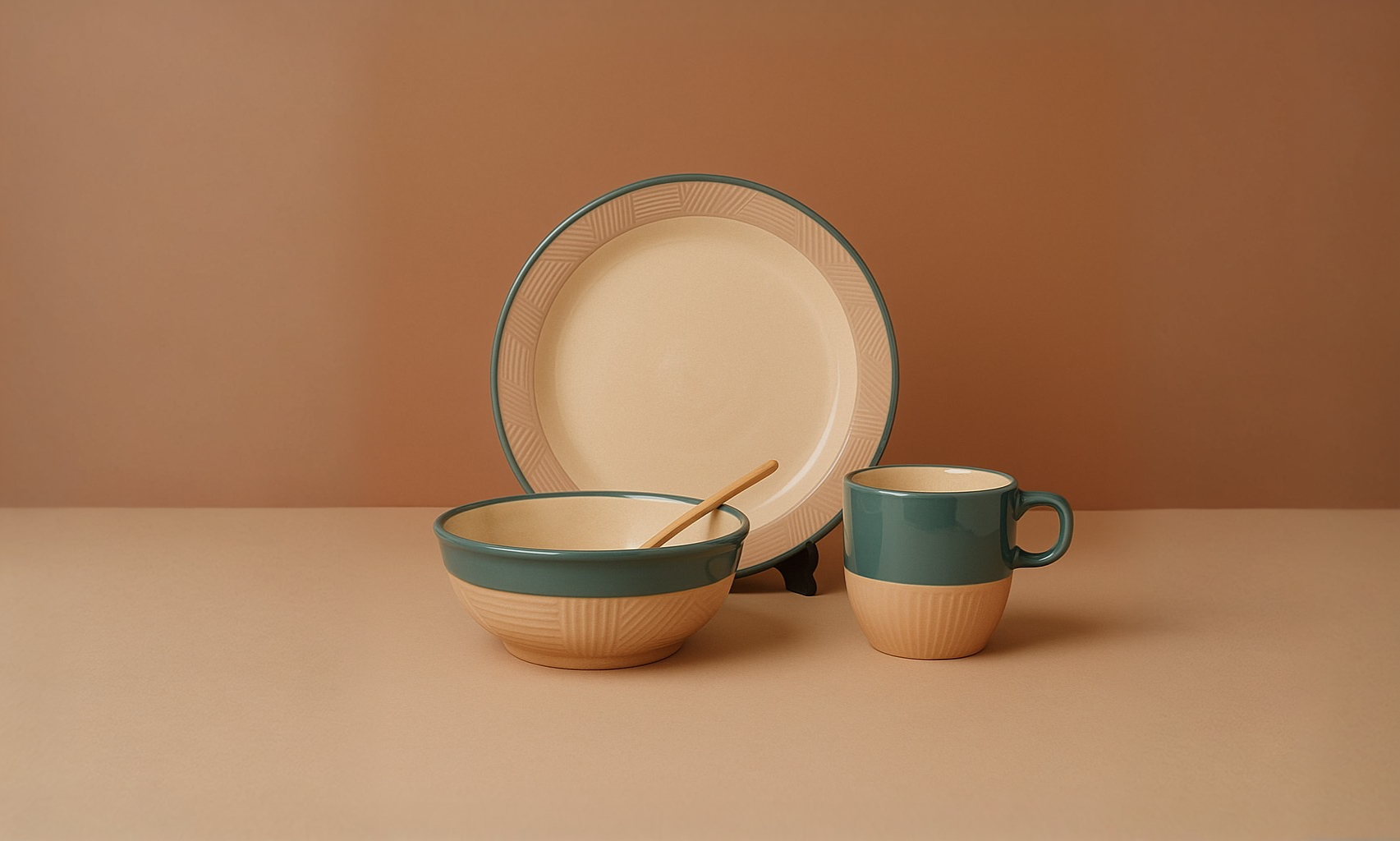
B2B Manufacturing Services
Technical Expertise & Guidance
Whether you are launching a new tableware line, engineering custom stoneware for retail, or sourcing heavy-duty vitreous china for hospitality chains, our technical consultation sessions connect your buying team directly with factory engineers in Thailand.
Evaluate CAD drawings, structural integrity, edge chip resistance, and 3D printing feasibility for bespoke coupe plates, deep bowls, or customized mug handles.
Examine reactive glazes, matte finishes, and body formulation options (Vitreous China, Stoneware, Terracotta) matched against FDA and EU lead/cadmium safety standards.
Inspect our roller kiln infrastructure, automated glazing lines, and discuss container volume scheduling, target lead times, and customs documentation (AEO status).
Structured B2B Onboarding
A transparent product development and manufacturing path designed to protect your brand integrity and calendar deadlines.
Upload target specifications or sign a mutual NDA to ensure proprietary designs remain protected before technical review.
Meet with our ceramic engineers to align body density, glaze stability, unit target price, and batch order quantities.
Receive physical 3D-printed ceramic samples and lab testing reports for atomic absorption, thermal shock, and color tolerance.
Lock in roller kiln production windows, inline quality checks, drop-test packaging, and export vessel booking.
Quality & Safety Assurance
Over 95% of our ceramic output is exported globally. Every production run undergoes rigorous internal laboratory validation to maintain strict international compliance.
Verifies lead and cadmium leaching levels comply strictly with FDA (21 CFR 109/540) and European Regulation (EC) No 1935/2004 standards.
Numerical delta-E color meter evaluation ensures consistent glaze tones across initial production runs and subsequent repeat orders.
Monitors thermal expansion co-efficiency of clay and glaze to prevent crazing, thermal shock cracking, and dishwasher degradation.
Slip-stage particle control guarantees body density and minimizes firing deformation or warpage during high-temperature kiln cycles.
Buyer Questions
Our engineering and product design teams will evaluate your CAD drawings, target physical properties (vitreous china vs stoneware), reactive glaze developments, MOQs, unit pricing, international food safety compliance (FDA, EU), and production timelines.
Yes. We respect our buyers' intellectual property. You can request a mutual NDA prior to sharing proprietary 3D models or custom glaze references for technical review.
Once technical drawings and material specifications are confirmed, our studio produces physical 3D-printed ceramic models within 7–14 days for shape sign-off.
Minimum order quantities start at 2,000 pieces per shape/glaze for stoneware and terracotta, and 3,000 pieces for vitreous china. Container load optimization (FCL/LCL) can be arranged based on your logistics calendar.
Speak directly with our technical sourcing specialists to review your product ideas, custom glaze matching, or production schedules.
Contact Us