Engineered for high-volume foodservice, hospitality procurement, and retail distribution. Certified lead/cadmium free, microwave safe, and chip-resistant.
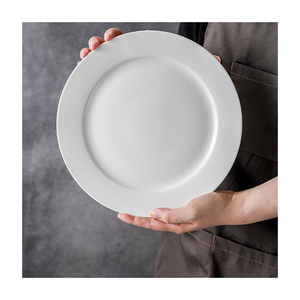
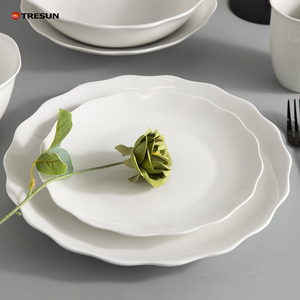
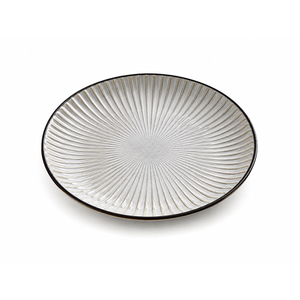
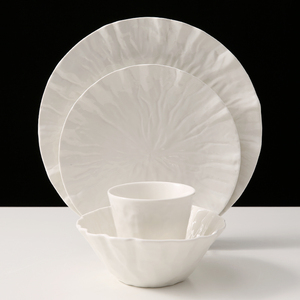
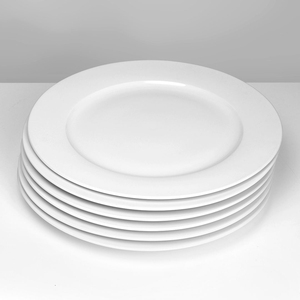
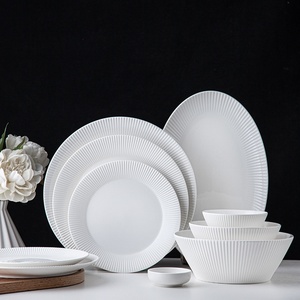
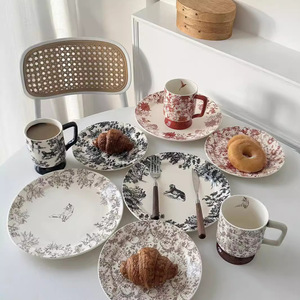
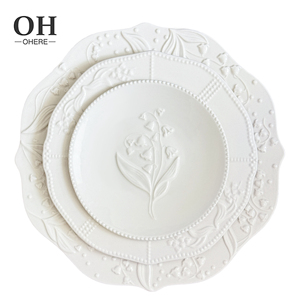
In the global hospitality and retail distribution markets, procurement decisions for commercial tableware are fundamentally driven by material longevity, mechanical strength, and strict regulatory compliance. As a certified CE Porcelain Plates Factory & Exporter operating advanced production facilities across South East Asia, Crown Ceramics integrates structural geology, mineral chemistry, and precision automation to engineer plates that withstand the intense thermal and physical stresses of commercial dishwashing and high-frequency service.
The term "porcelain" encompasses a precise ceramic formulation characterized by high density, non-porous vitrification, and translucent aesthetic qualities. Unlike standard earthenware or basic stoneware, high-grade commercial porcelain relies on an optimal mineral triad composed of refined kaolin clay, quartz silica, and potassium feldspar fired at temperatures exceeding 1,280°C (2,336°F).
Technical Specification Metric: True commercial vitreous china must maintain a water absorption rate under 0.5% (EN 1217 standard), preventing organic absorption, bacterial proliferation, and micro-fracturing during industrial thermal shock cycles.
Our raw material compounding process utilizes purified kaolin for structural workability, micro-milled quartz to impart mechanical rigidity, and feldspathic fluxing agents to promote liquid phase sintering during high-temperature roller-kiln firing. Through this process, open pores within the green body are systematically sealed as microscopic mullite crystals synthesize with glass phase structures.
Utilizing ultra-high pressure up to 300 bar, dry pressing ensures uniform density across the plate surface, eliminating stress points that cause warpage and rim chipping.
Robotic sprayers apply lead-free glazes at controlled micron thicknesses, creating a non-scratch barrier rated at Mohs Hardness Level 7 to resist cutlery abrasion.
Continuous computer-controlled firing curves regulate thermal expansion co-efficients, achieving complete vitrification without structural sagging.
To assist global procurement officers and quality assurance managers in evaluating tableware body selections, the comparative technical properties are outlined below:
| Material Classification | Firing Temperature (°C) | Water Absorption Rate | Modulus of Rupture (MOR) | Thermal Shock Differential (ΔT) | Target Sourcing Sector |
|---|---|---|---|---|---|
| Vitreous Porcelain (Crown China) | 1,250°C – 1,320°C | < 0.2% | > 140 MPa | ≥ 200°C (EN 1183) | HoReCa, Airline Catering, Luxury Hotel |
| Fine Bone China | 1,200°C – 1,260°C | < 0.5% | > 120 MPa | ≥ 180°C | Fine Dining, High-End Wedding Events |
| Commercial Stoneware | 1,180°C – 1,230°C | < 3.0% | > 85 MPa | ≥ 150°C | Retail Lifestyle, Fast-Casual Dining |
| Traditional Earthenware | 1,000°C – 1,150°C | > 8.0% | > 45 MPa | ≥ 110°C | Seasonal Retail, Decorative Homeware |
The global ceramic dinnerware market is undergoing a structural paradigm shift. Sourcing directors, hospitality supply chain executives, and brand managers are moving beyond basic price-per-piece metrics. Sourcing strategies are increasingly prioritizing supply chain transparency, carbon footprint metrics, total cost of ownership (TCO), and strict food contact chemical safety standards mandated by international regulatory bodies.
Through empirical analysis of market procurement data, three dominant trends are shaping how porcelain plates are engineered and manufactured for international export:
Institutional buyers in the EU and North America are actively specifying ceramic manufacturers that implement closed-loop raw material recycling. Modern factories reclaim unfired greenware clay slurry and utilize waste-heat recovery systems from roller kilns to preheat drying chambers, reducing overall carbon emissions per ton of finished porcelain.
Commercial kitchens are optimizing storage space and plating versatility. Traditional wide-rimmed dinner plates are rapidly giving way to deep coupe shapes, rimless minimalist profiles, and stackable modular geometry that prevents rim-to-rim friction during high-speed washing cycles.
With regulations continuously tightening across the European Union (EU Regulation 1935/2004, Directive 84/500/EEC) and California Proposition 65, buyers require batch-certified atomic absorption spectrometry (AAS) testing confirming zero lead and cadmium leaching under acidic conditions.
With over 30 years of specialized OEM and ODM manufacturing experience, Crown Ceramics has established itself as an authoritative manufacturer and exporter of vitreous china, stoneware, and porcelain tableware in South East Asia. Operating two advanced production facilities spanning over 100,000 square meters, our factory combines master ceramic craftsmanship with high-throughput industrial automation.
Quality assurance is embedded directly into each phase of our production workflow rather than executed as a final visual check. Our in-house ceramic research and testing laboratory conducts continuous chemical and physical audits across four key stages:
Every incoming batch of kaolin, feldspar, and clay undergoes X-ray Fluorescence (XRF) spectroscopy to analyze elemental oxide compositions, guaranteeing thermal co-efficient uniformity before slip preparation.
Laser particle size analyzers monitor the wet milling process in ball mills. Slip viscosity and thixotropy are strictly controlled to prevent internal voids during high-pressure forming.
To eliminate batch-to-batch glaze variance on repeat orders, glazes are measured using industrial spectrophotometers under standard D65 illuminant conditions, holding ΔE color variances below 0.3.
As a verified Tier-1 exporter supplying international hotel chains, retail conglomerates, and government procurement channels, our manufacturing framework holds rigorous global accreditations:
For private label retailers and commercial dining brands seeking proprietary shapes, custom backstamps, or specialized reactive glaze finishes, our dedicated R&D studio offers a seamless development pathway from concept rendering to full container load (FCL) delivery.
Technical CAD drawings are validated within 48 hours. Using rapid 3D printing and master model turning, physical shape prototypes are provided for hand-feel and volumetric evaluation within 7–14 days.
Custom glaze formulations—including matte finish, reactive glaze movement, glossy translucent glaze, or textured relief—are trialed alongside screen-printed high-temperature decals.
Pre-production samples undergo destructive edge-impact testing (ASTM C368), 500-cycle dishwasher resistance, microwave field heating tests, and heavy metal extraction assays prior to mass tooling.
Answers to common technical, logistics, and compliance questions submitted by global procurement teams.
Request factory-direct wholesale pricing, order sample kits, or schedule a technical consultation with our engineering team for your upcoming OEM/ODM tableware program.
