Engineered for Commercial Foodservice, High-Impact Hospitality, and Global Retail Distribution
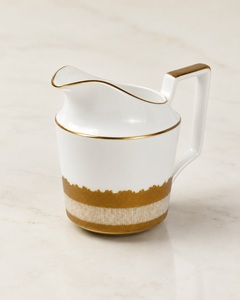
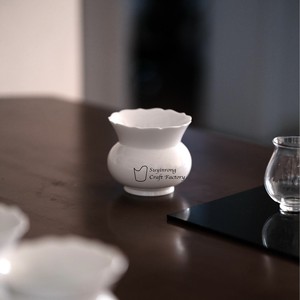

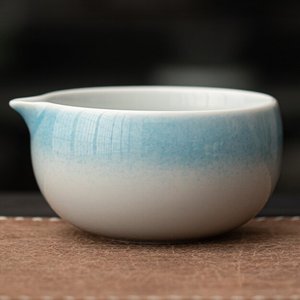
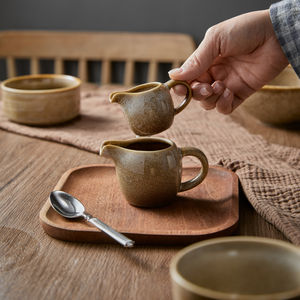
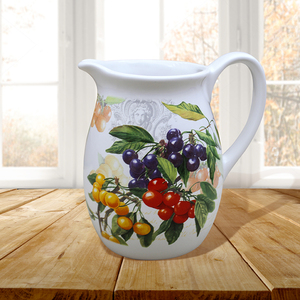
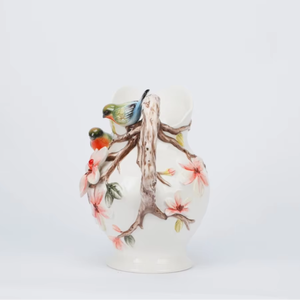
In global B2B procurement across retail, hospitality, and promotional channels, sourcing high-performance ceramic pitchers, milk jugs, and liquid servers requires a precise understanding of ceramic material chemistry, thermal stress behavior, and structural geometry. A ceramic pitcher is not merely decorative serveware; it is a dynamic vessel subjected to mechanical impact, rapid temperature fluctuations, and repeated commercial dishwashing cycles. Choosing an experienced ceramic pitcher factory and OEM/ODM supplier ensures that products comply with strict international food-contact laws while retaining visual elegance.
Professional procurement teams must evaluate the underlying ceramic body to ensure alignment with their target distribution channel. At Crown Ceramics, our dual production plants in Bangkok and Ratchaburi, Thailand, specialize in three primary ceramic bodies engineered for specific technical performance metrics:
| Ceramic Body Type | Water Absorption | Firing Temperature | Thermal Shock Limit | Primary B2B Target Market |
|---|---|---|---|---|
| Vitreous China | < 0.5% | 1,220°C – 1,260°C | ΔT = 180°C Rapid Drop | Commercial Hospitality, Airlines, Hotels |
| High-Fired Stoneware | < 3.0% | 1,180°C – 1,230°C | ΔT = 150°C Rapid Drop | Retail Tableware Brands, Lifestyle Chains |
| Refractory Terracotta | 5.0% – 8.0% | 1,000°C – 1,080°C | Gradual Heat Retention | Artisanal Serveware, Garden & Oven-to-Table |
| Fine Bone China (45%) | < 0.1% | 1,200°C – 1,250°C | ΔT = 140°C Rapid Drop | Luxury Tableware, Gold Luster Gifting Sets |
When auditing a ceramic pitcher manufacturer, corporate buyers must review specific production parameters that guarantee long-term product integrity. Defects such as spout dripping, glaze crazing, pinholing, and handle shear failure frequently stem from inadequate slip formulation or poorly controlled kiln curves. Below are key technical pillars maintained by Crown Ceramics:
The curvature and lip taper of a ceramic pitcher spout determine fluid release dynamics. Through 3D modeling and hydrodynamic testing, our engineering studio calculates the precise angle of lip departure. This prevents surface tension back-beading, guaranteeing a clean cut-off during liquid pouring without dripping onto linens or tabletops.
The handle attachment joint represents the highest stress zone on a filled ceramic pitcher. Our pressure casting and hand-finishing protocols utilize slip joining formulas with matched moisture content. This ensures seamless molecular fusing during bisque firing, eliminating internal micro-voids and increasing handle pull-strength beyond 45 kg of direct downward force.
Food contact safety is paramount. In-house atomic absorption spectrophotometry is conducted on every glaze batch to certify complete compliance with FDA 21 CFR 175.300, California Proposition 65, and European Commission Directive 84/500/EEC. Heavy metal leaching (Lead & Cadmium) is guaranteed below detectable laboratory limits.
The global ceramic serveware market is shifting rapidly under the influence of environmental regulations, changing retail consumer aesthetics, and supply chain diversification away from traditional manufacturing hubs. Strategic buyers are updating their vendor selection criteria based on three emerging trends:
Commercial buyers are increasingly replacing flat, solid glazes with multi-layered reactive and gradient glazes. Advanced glaze formulations produce organic color variations during roller-kiln firing, providing hand-crafted artisanal aesthetics with factory-grade structural durability.
Sustainable procurement practices demand closed-loop manufacturing. Crown Ceramics reclaims 100% of unfired clay waste back into raw slip preparations and recycles process water, significantly lowering energy consumption per fired kilogram in line with ISO 14001 standards.
To mitigate geopolitical risk and tariff penalties, international brands are moving sourcing programs to Thailand. With Authorized Economic Operator (AEO) status, Crown Ceramics provides streamlined customs clearance and predictable container lead times to North American and European ports.
Founded in 1995, Crown Ceramics Company Limited has grown into a premier South East Asian manufacturer of high-grade tableware, custom milk pitchers, water jugs, and tea accessories. Producing over 10 million pieces annually with a workforce of 800 skilled ceramicists, our capabilities support global retail giants, department stores, and hospitality procurement agencies.
Transforming a digital concept into mass-produced ceramic tableware follows a rigorous 5-stage quality-assured workflow:
Essential Technical Insights for Sourcing Ceramic Pitchers & Jugs Direct from Factory
For custom OEM/ODM stoneware and terracotta pitcher programs, our standard MOQ starts at 2,000 pieces per shape and glaze variation. For high-grade vitreous china commercial water jugs, standard MOQ starts at 3,000 pieces. Mixed-container orders combining multiple tableware SKUs can be structured to optimize freight efficiency.
Every raw material batch undergoes particle distribution and atomic absorption spectroscopy in our on-site laboratory. All glazes and decals are certified 100% Lead and Cadmium free, strictly adhering to US FDA, California Prop 65, and EU food-contact standards. Third-party testing certification from SGS, Intertek, or TÜV is provided per shipment.
Yes. Our in-house ceramic studio specializes in glaze chemistry matching, reactive firing techniques, underglaze/overglaze decalcomania printing, and real gold/platinum luster application (such as seen on our Mystic Rose Bone China series). Send us a pantone code, digital artwork, or physical target sample for precise reproduction.
Sampling and 3D plaster mold approval take approximately 14–21 days. Once pre-production samples are signed off, mass production typically requires 60–90 days depending on shape complexity and kiln scheduling. Repeat orders operate on expedited 45–60 day production cycles with forecast planning support.
We engineered drop-tested export packaging solutions including drop-certified corrugated master cartons, internal molded pulp trays, individual mail-order color gift boxes, and heavy-duty plastic-wrapped palletization. All packaging complies with ISTA-1A and ISTA-3A transit drop testing standards.
Request our complete 2025 OEM/ODM Product Catalog, technical specifications, and factory wholesale price list directly from our development team.
