Retro Stoneware
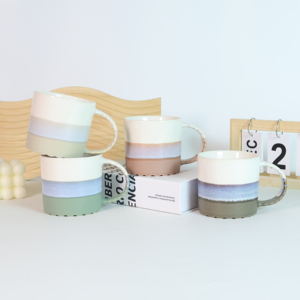
Hot Selling New Item Reactive Glaze for Coffee Tea Retro Stoneware OEM
Firing Temp: 1,240°C High-Fired
Feature: Custom Gradient Finish
Application: Coffee Shops & Business Gifts
Inquire Now
Hospitality Grade
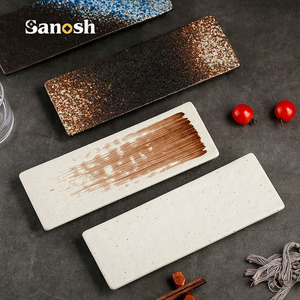
SANOSH OEM ODM Reactive Glaze Ceramic Dishwasher Safe Dinner Plates
Absorption: < 0.5% (Vitreous)
Durability: Chip-Resistant Rim
Application: Modern Restaurant Tableware
Inquire Now
Luxury 4-Piece Set
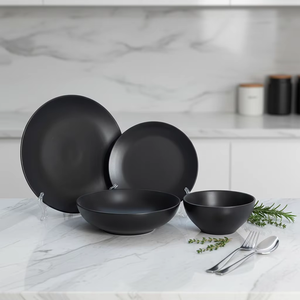
Guangda Luxury 4-Piece Black Reactive Glaze Classic Dinnerware Set
Material: Reinforced Stoneware
Thermal Shock: Microwave & Dishwasher Safe
Finish: Satin Black Oxide Crystallization
Inquire Now
Artisanal Minis
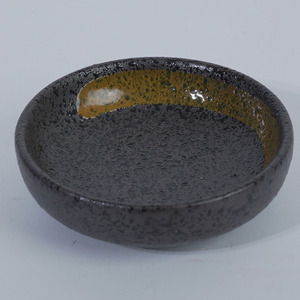
Black Amber Reactive Glaze Eco-Friendly Handmade Sauce Dish
Dimensions: 7.5 x 2.5 cm
Safety: Non-Toxic Lead/Cadmium Free
Application: Hotel & Fine Dining Serveware
Inquire Now
16-Piece Retail Set
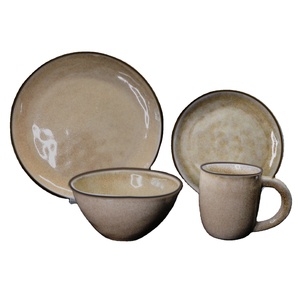
JIUWANG Factory Juego De Vajilla De 16 Piezas Reactive Glaze Set
Packaging: Drop-Test Approved Mail Box
Capacity: Bulk Stock Available
Market: Department Store Retail Lines
Inquire Now
Bulk Frit & Body
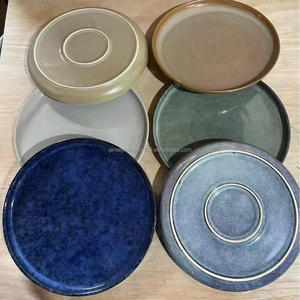
1 Ton Wholesale Colored Reactive Glaze Raw Porcelain & Body Compounds
Purity: Refined Mineral Oxide Formulas
Grade: Industrial High-Yield Firing
Use: Custom Pottery & Factory Glazing
Inquire Now
Coupe Tableware
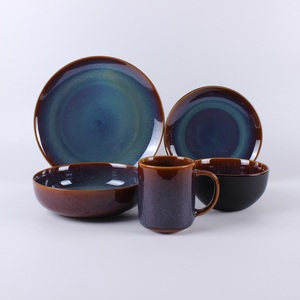
Ceramic Tableware High-Fired Reactive Glaze Dinnerware Collection
Forming: Isostatic Pressing
Surface: Multi-Layer Reactive Melt
Compliance: FDA / EU 84/500/EEC
Inquire Now
Geometric Decor

Customizable Reactive Glaze Geometric Shapes & Decor Vases
Structure: Waterproof Non-Porous Body
Customization: OEM Color & Shape Cutting
Application: Home Decor & Lifestyle Accents
Inquire Now
30+
Years Manufacturing Experience
10M+
Annual Pieces Capacity
ISO & AEO
Certified Quality & Customs
The Engineering Science Behind Reactive Glaze Tableware
In modern ceramic manufacturing, reactive glaze tableware represents the perfect equilibrium between industrial repeatability and organic, artistic variance. Unlike traditional mono-color glazes that rely on homogeneous pigment suspension, reactive glazes are dynamic chemical formulations composed of mineral fluxes, silica, alumina, and transition metal oxides (such as iron oxide, copper carbonate, cobalt oxide, and rutile titanium dioxide).
During the thermal sintering cycle in high-temperature roller kilns (reaching 1,180°C to 1,260°C), these oxides undergo complex chemical phase separations and liquid-phase crystallization. As the kiln cools according to precise thermodynamic ramp rates, tiny micro-crystals nucleation occurs within the molten glass matrix. This yields distinct variegated patterns, variegated mottling, iridescent halos, and tactile surface textures that make every fired piece visually unique while remaining structurally identical in dimension and weight.
Key Physicochemical Characteristics of Industrial Reactive Glazes
- Phase Separation & Micro-Crystallization: The controlled precipitation of crystals (such as titanite or hematite) during cooling generates depth, metallic sheens, and multi-tone speckling without compromising surface smoothness.
- Vitreous Body Compatibility: The glaze formulation must be precisely matched to the thermal expansion coefficient (CTE) of the underlying ceramic body—whether vitreous china, stoneware, or terracotta—to completely eliminate crazing, shivering, or delayed pinholing.
- Food Safety & Metal Stability: Industrial-grade reactive glazes require complete vitrification so that metallic coloring agents are locked permanently inside the silica lattice, guaranteeing absolute zero leaching of lead, cadmium, or nickel under acidic food contact conditions.
Dual Production Facilities
Operating two advanced manufacturing plants across Bangkok and Ratchaburi, Thailand, yielding over 10 million pieces annually across Vitreous China, High-Fired Stoneware, and Terracotta bodies.
In-House Compliance Testing
Equipped with modern laboratories for Atomic Absorption Spectroscopy, color-meter ΔE control, dilatometric expansion analysis, and drop-impact stress testing ensuring FDA, EU 84/500/EEC, and California Prop 65 safety.
Global Certification Standards
Fully audited and certified under ISO 9001 (Quality Management), ISO 14001 (Environmental Management), SMETA (Ethical Trade Audit), and holding AEO Status (Authorized Economic Operator) for expedited international customs clearance.
Future Procurement & Design Trends in Reactive Glaze Tableware (2025–2030)
As commercial buyers, hotel purchasing directors, and retail sourcing specialists evaluate next-generation ceramic lines, key market dynamics are reshaping the reactive glaze manufacturing landscape. Sourcing teams are shifting focus from simple visual appeal toward technical longevity, supply chain sustainability, and tactile dining experience.
1. Organic Biophilic Aesthetics
Modern consumers and hospitality guests gravitate toward warm earth tones—moss green, amber black, deep ocean blue, and raw terracotta-rimmed finishes. Sourcing departments are prioritizing glazes that mimic natural mineral formations and raw geological strata.
2. Zero-Waste & Reclaimed Clay Bodies
Environmental governance (ESG) compliance is now a standard procurement requirement. Forward-thinking manufacturers are introducing recycled clay formulations, recovering 100% of unfired clay scraps and reusing process water via closed-loop filtration systems.
3. Matte-Gloss Dual-Contrast Textures
Innovations in double-dipping and wax-resist glaze application allow factories to combine satin matte exterior surfaces with ultra-smooth glossy reactive interiors, creating striking visual contrasts that elevate food presentation.
4. Ultra-Low Water Absorption Standards
Hospitality buyers are shifting away from porous low-fired earthenwares. Future procurement mandates minimum water absorption of < 0.5% (Vitreous China) or < 3.0% (High-Fired Stoneware) to eliminate moisture absorption during high-pressure commercial dishwashing.
Ceramic Body Procurement Benchmarking Matrix
Select the optimal ceramic body formulation based on target channel demands, thermal performance, and price positioning:
| Performance Spec |
Vitreous China |
High-Fired Stoneware |
Terracotta Ceramics |
| Firing Temperature |
1,220°C – 1,260°C |
1,180°C – 1,230°C |
1,000°C – 1,080°C |
| Water Absorption |
< 0.5% (Non-Porous) |
< 3.0% (Durable) |
5.0% – 10.0% (Semi-Porous) |
| Mechanical Strength |
Extreme (Impact Resistant) |
High (Retail Grade) |
Moderate (Warm & Rustic) |
| Thermal Shock Tolerance |
High (> 180°C Delta) |
High (> 150°C Delta) |
Moderate (Ideal for Ovenware) |
| Best Suited Commercial Use |
HoReCa, Hotels, Airlines |
Department Stores, Retail Brands |
Bakeware, Serveware, Decor |
01
Brief & Feasibility
Review 2D/3D drawings, target unit costs, channel compliance needs, and recommend optimal body formulations.
02
Rapid Prototyping
3D-printed sample or hand-thrown model produced within 7–14 days for shape sign-off and ergonomic evaluation.
03
Glaze & Decal Matching
Lab glaze trial formulations matched to target color swatches, running test firings for melt movement and texture.
04
Pre-Production Lab Test
Pre-production batch subjected to heavy metal atomic absorption, microwave thermal shock, and dishwasher safety tests.
05
Kiln Firing & Export
Mass roller-kiln firing under automated atmosphere control, inline QC inspection, drop-tested packing, and AEO container shipping.
How do you control color variance across large-scale reactive glaze production runs?
While reactive glazes naturally possess minor organic variance, we enforce strict industrial color boundaries using digital spectrophotometers (ΔE color-space metrics). By controlling raw chemical particle sizing, slip density, glaze application thickness (measured in grams per square inch), and automated roller kiln temperature zones within ±2°C, we keep batch-to-batch variation well within acceptable buyer tolerances.
Are your reactive glazes 100% lead-free, non-toxic, and FDA/EU compliant?
Yes. All our ceramic formulations utilize lead-free, cadmium-free mineral frits. Every production lot undergoes internal Atomic Absorption Spectroscopy (AAS) testing to verify zero metal release under acidic leaching conditions. Our products fully comply with US FDA CPG 7117.06/07, European Directive 84/500/EEC, and California Proposition 65 requirements.
What are your minimum order quantities (MOQs) for OEM custom shape development?
Standard MOQs for custom OEM stoneware and terracotta collections start at 2,000 pieces per shape/color. For high-capacity Vitreous China runs, MOQs typically start at 3,000 pieces. We also accommodate mixed-container consolidated shipments for brand partners launching multi-item seasonal collections.
How do your reactive glaze ceramics perform in commercial dishwashers and microwave ovens?
Our high-fired stoneware and vitreous china items are engineered specifically for demanding commercial usage. Because our body and glaze thermal expansion coefficients (CTE) are precisely synchronized, our tableware exhibits superior thermal shock resistance (withstanding sudden temp shifts of > 150°C to 180°C) without crazing, cracking, or glaze chipping.
What is the standard lead time from initial inquiry to final port delivery?
Initial 3D shape prototyping takes 7–14 days. Glaze matching and pre-production sample release add 2–3 weeks. Once samples are approved, mass kiln production and packaging require approximately 45–60 days. Total lead time from brief to FOB container shipment generally ranges between 90 and 120 days.
Why source ceramic tableware from Thailand instead of traditional regions?
Thailand offers world-class raw kaolin clay deposits, skilled craftsmanship, competitive logistics, and stable export tax structures. Furthermore, Crown Ceramics’ facilities hold AEO status and international ethical certifications (SMETA, ISO 9001/14001), ensuring frictionless customs clearance and supply chain security for Western importers.
Ready to Develop Your Custom Reactive Glaze Collection?
Partner with a trusted, ISO-certified ceramic manufacturer in Thailand. Contact our engineering team today to request glaze reference swatches, preliminary project quotes, or factory audit schedules.
