Engineered for high-volume commercial dining, hospitality chains, and retail buyers in Greater Nagoya. Each piece features vitrified clay bodies, food-safe glazes compliant with Japanese sanitation codes, and reinforced impact edges.








Nagoya, as the industrial heartland of Aichi Prefecture and the broader Chubu economic gateway, occupies a legendary status in global ceramics. Bordered by historical kiln districts such as Tokoname (famous for unglazed red clay earthenware and bonsai pottery) and Seto (the cradle of Japanese porcelain, giving rise to the term Setomono), procurement directors in Nagoya possess an exceptionally refined palate for ceramic artistry.
However, modern commercial dynamics—specifically in hotel procurement, restaurant expansion, retail department store chains, and large-scale architectural developments across Meieki (Nagoya Station district) and Sakae—present a structural challenge: bridging traditional artisan craftsmanship with high-capacity, cost-effective industrial manufacturing.
While local artisan kilns excel at bespoke studio pieces, regional procurement officers increasingly rely on specialized international OEM/ODM ceramic manufacturing hubs. By partnering with audited production centers in Thailand, corporate buyers in Nagoya secure scalable terracotta pottery, vitrified china tableware, and reactive stoneware that strictly adhere to Japanese Quality Assurance standards while optimizing unit economics under the Regional Comprehensive Economic Partnership (RCEP).
From traditional Hitsumabushi eel dining halls to upscale international hotels and urban green architecture in Sakae, different commercial environments impose distinct material and thermal stresses on ceramic products.
Nagoya’s vibrant culinary scene—ranging from classic Kaiseki houses in Nishi-ku to high-volume Izakayas and luxury hotel dining near Nagoya Station—demands serveware capable of enduring severe daily dishwashing cycles.
Our vitreous china and vitrified stoneware bodies offer edge-chip guarantees, thermal expansion coefficient control, and zero micro-crazing under commercial steam sanitization.
Terracotta retains deep cultural significance in Japanese outdoor aesthetic design. Large-format terracotta planters, rustic unglazed earthenware urns, and custom ceramic facade tiles are heavily integrated into Nagoya’s modern urban redevelopment projects.
Formulated with specialized iron-rich clays and low-shrinkage additives, our frost-resistant exterior terracotta withstands Aichi's seasonal freeze-thaw transitions without structural spalling or micro-cracking.
Nagoya serves as the regional distribution hub for major Japanese home lifestyle retailers and department store networks. Sourcing managers require consistent glaze color matching across production batches spanning multiple years.
Utilizing computerized atomic absorption spectroscopy and digital colorimeters, our factories maintain strict spectrophotometric color tolerances (Delta E < 0.5) for private-label dinnerware collections.
Importing ceramic tableware and terracotta cookware into Japan requires strict adherence to the Food Sanitation Act (Ministry of Health, Labour and Welfare - MHLW). Heavy metals such as lead (Pb) and cadmium (Cd) contained within decorative glazes or ceramic bodies pose stringent regulatory barriers at the Port of Nagoya customs inspection.
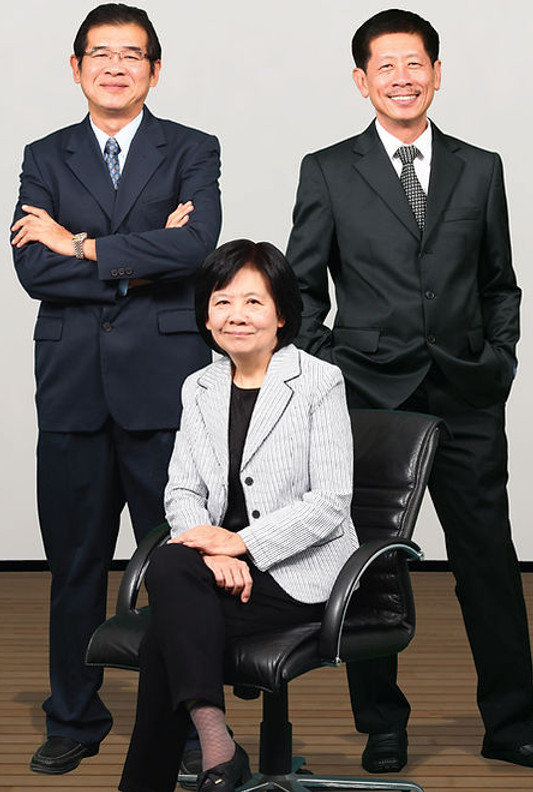
Our manufacturing facilities operate in-house testing laboratories equipped with Atomic Absorption Spectrometry (AAS) and Inductively Coupled Plasma (ICP) instruments. Every batch bound for the Japanese market undergoes rigorous acetic acid leaching protocols to guarantee zero heavy-metal migration, fully complying with Japan Industrial Standards (JIS S 2400 & MHLW Notification No. 370).
Selecting the optimal clay formulation depends on target operational conditions, weight requirements, and aesthetic preferences:
| Ceramic Body Type | Firing Temperature | Water Absorption | Mechanical Flexural Strength | Recommended Commercial Use |
|---|---|---|---|---|
| Vitreous China | 1,220°C – 1,260°C | < 0.5% (Vitrified) | > 120 MPa (High Impact) | Commercial Hospitality, Hotels, Airline Catering |
| High-Fired Stoneware | 1,180°C – 1,230°C | < 3.0% (Semi-Vitrified) | > 85 MPa | Lifestyle Retail, Casual Dining, Fusion Izakaya |
| Terracotta Pottery | 1,000°C – 1,120°C | 5.0% – 12.0% (Porous/Glazed) | > 45 MPa | Bakeware, Serveware, Garden Planters, Facades |
| Fine Bone China / Alumina | 1,250°C – 1,280°C | < 0.2% (Translucent) | > 140 MPa | Banquet Halls, Fine Dining, Luxury Giftware |
Crown Ceramics Company Limited stands as one of Southeast Asia's premier ceramic tableware manufacturers. Operating dual state-of-the-art production hubs in Bangkok and Ratchaburi, Thailand, we specialize in high-capacity OEM, private-label, and ODM manufacturing for export destinations across North America, Europe, and East Asia—with Japan representing our key strategic market.
Our technological matrix integrates automated Isostatic Dry Pressing for ultra-flat plates and platters, precision pressure casting for complex hollowware, and continuous computer-controlled Roller Kilns that ensure uniform heat distribution across every firing cycle.
Manufacturing Tech Stack:
Independently verified management systems ensuring seamless compliance for Japanese corporate procurement protocols.
 ISO 9001 Quality
 ISO 14001 Env.
 SMETA Audited
 AEO Customs
.jpg) MHLW Food Safe
MHLW Food Safe
Addressing essential questions regarding import logistics, tariffs, custom mould tooling, and technical compliance when sourcing terracotta and ceramics for the Japanese market.
Tokoname pottery is celebrated for hand-crafted studio aesthetics and specialized unglazed teapot production utilizing indigenous iron-rich mudstones. However, for commercial hospitality or high-turnover retail, authentic unglazed Tokoname clay can suffer from high water absorption and delicate edge durability. Our industrial glazed terracotta engineered for export combines the rich, warm natural red-clay aesthetic of traditional terracotta with vitrified surface sealing, making it 100% dishwasher-safe, non-porous, and resistant to commercial food staining.
Under the Regional Comprehensive Economic Partnership (RCEP) and the Japan-Thailand Economic Partnership Agreement (JTEPA), qualifying ceramic tableware and terracotta goods manufactured in Thailand enter Japan under preferential 0% tariff schedules (HS Code 6911.10 for Porcelain/China and HS Code 6912.00 for Ceramic/Stoneware/Terracotta), providing substantial cost advantages over non-FTA manufacturing regions.
Our experienced logistics department provides complete export documentation packages customized for Japanese customs clearance, including the Certificate of Origin (Form RCEP / Form JTEPA), Commercial Invoice, Detailed Packing List, Bill of Lading (B/L), and pre-issuance test reports certifying compliance with Japan's Food Sanitation Act (Leaching test certificate for Lead and Cadmium release).
For custom OEM terracotta and stoneware shape developments, our standard production runs start at 2,000 pieces per item/glaze, and 3,000 pieces for vitreous china. Rapid 3D-printed physical sampling models are produced within 7 to 10 days of approved technical CAD drawings. Prototype glaze matching requires 2 to 3 weeks, while mass production to vessel departure at port averages 60 to 90 days.
Yes. Our in-house chemical glaze development laboratory specializes in formulating reactive, satin-matte, and crystalline glazes that recreate traditional Japanese ceramic aesthetics—such as copper-green Oribe effects, iron-speckled Tenmoku glazes, and soft milky Shino finishes—while ensuring the glaze layer remains fully non-porous, acid-resistant, and lead-free.
We utilize export-grade 5-ply corrugated master cartons paired with custom-moulded honeycomb dividers, individual polybags, and drop-tested inner packaging designed to exceed ISTA 1A transit standards. Container shipments are palletized, stretch-wrapped, and strapped with corner protectors to ensure 99.9% damage-free delivery at the Port of Nagoya or inland distribution warehouses across Aichi Prefecture.
